
The conflicting messages toward a generation brought up online
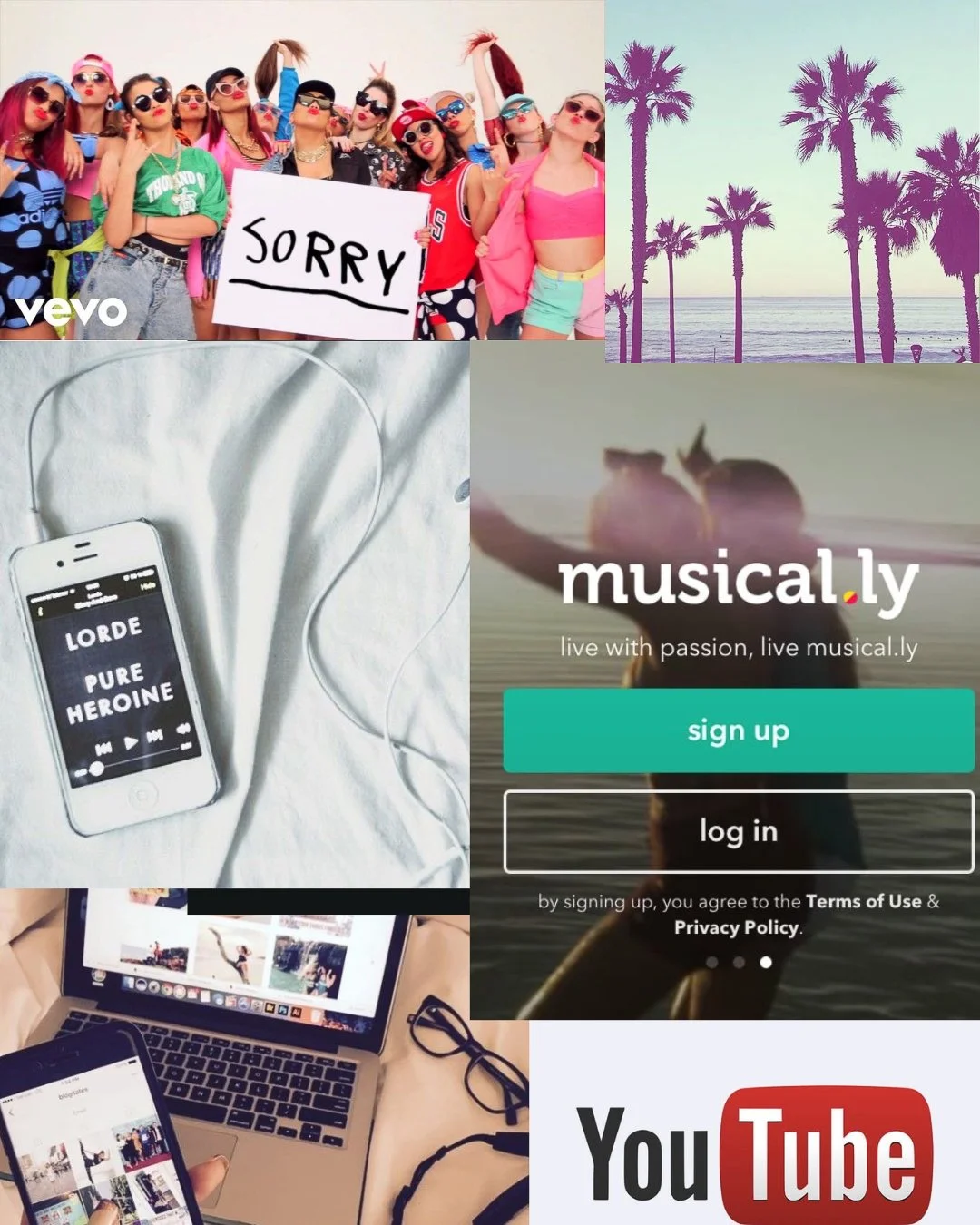
Graphic demonstrating different ways we can be affected by the internet (Lauren Chavez / The Puma Prensa)
By Lauren Chavez, Features Editor
Lorde’s “A World Alone” contains a line that I’ve always found fascinating: “Maybe the Internet raised us, or maybe, people are jerks.” It seems simple, but the concept of not being able to differentiate between bad human behavior in general and bad human behavior as an effect of being raised in an age characterized entirely by the Internet has, for a long time, forced me to contemplate the impact that growing up online has had on our generation. Most people, especially older people raised in a time long before Tumblr culture came to the general consensus, believe growing up online has turned us into a generation of depressed, fragile, uneducated shells who don’t know how to function in the real world and have had their brains turned to mush by screens. What I find memorable when reminiscing on my childhood, however, is not the irreparable damage the screen did to my brain, nor lifelong trauma, but instead, the hours I spent watching Vevo music videos on repeat over my daily bowl of frozen fruit, watching makeup artists abandon blush for distinct smoky eyes and neutrals in 2016 YouTube tutorials, and witnessing the influencer Olympics that was (and still is) Coachella every year through vlogs and lookbooks.
While some may view this as a waste of a childhood, or a “shame” compared to a time before instant gratification through a phone screen and the world of high speed Internet access, what it has instead done for me is given me a kind of cemetery housing my childhood. Everything lasts forever on the Internet. It’s jarring today, in 2026, to be scrolling through YouTube and to still be able to watch the vlogs, tutorials, challenges, and drama scandals that, in my mind, are somehow still stuck in the 2010s. The device is different and so are the eyes behind it, but the media remains the same, frozen in the place of its inception.
Nostalgia is one of the most complicated and interesting emotions human beings can feel. It can invoke feelings of happiness, reminding you of a time in your life that you would do anything to go back to, and those of intense sadness, because you know you never will. I’ve found it to be one of, if not the deepest, emotion that I’ve felt, and a major reason for that is that pretty much everything that I miss about my childhood–the good, the bad, and the ugly–can be (at least, somewhat) experienced through a simple Google search.
People often question why Gen Z is so obsessed with certain years, whether it be 2016 (like it is right now), 2014, 2012, or the early 2000s. Every year, there becomes a trend across social media to transform the digital landscape into a replica of whatever life was like 10 years ago. We are so desperate to relive these years, whether it be bringing back music that was trending that year, dressing on par with the latest fashion trends of that time, or digging up old relics that have long since been buried in 10 years’ worth of memories. Almost everyone reminisces on years past and likes to go back and attempt to remind themselves what life was like back then. However, I believe that because we were raised on the Internet and have so many strong memories associated with our nostalgic years because of it, that feeling of missing what once was and trying to bring back a time when life seemed simpler is exacerbated heavily.
Although the kids that currently attend Maria Carrillo High School definitely aren’t old enough to remember absolutely everything a true Internet veteran would, like the first YouTube videos or a time when Vidcon was a new concept with only a few creators attending, I can guarantee that most of us have strong memories attached to the Internet and look back on those times with at least some sort of fondness. We’ve seen multiple apps through several different phases, like watching Vine blossom into Musically and then TikTok, and watching the way creators use Instagram morph into so many different creative aesthetics. In a simple scroll on an Instagram account that has been in use since the early 2010s, we can watch someone’s entire life take shape in small rectangles, witness them growing up within a matter of seconds. We can scroll all the way to the bottom and see how bad the camera quality was in 2012, but how recognizable the filter on every photo taken then was, then watch as a kaleidoscope of memories and moments is whisked into the present with a simple swipe of our fingers. There’s almost a secret language that we share. It’s always driven me crazy when adults in my life didn’t understand certain references or hadn’t heard certain music that was such a pinnacle of my childhood, even though it’s simply because they were raised in a different time and weren’t focusing on those things when they were busy with their own lives during the dawn of the internet.
Of course, there are downsides to our exposure to instant access to a search engine at such young ages, and I’m not saying that the positive aspects of that outweigh the negatives. In fact, I don’t think that they do. I do believe, however, that there is a special time of magic that comes along with our generation's connection to the Internet, something that past and future generations will simply never be able to experience in the same way. Adults often joke about the way our generation can be so lighthearted, and that we don’t tend to take much seriously, but there’s a sense of camaraderie between all of us, even those who have never met before, that shines through the negative connections that they immediately assume we’ll hone. Open any comment section on almost any platform designed and centered around Gen Z, and it’s obvious that the very thing that was said to be separating us from our peers and was turning us into cold, distant people has really brought us together, even if it’s sometimes in a twisted way.
Even though there is so much wrong associated with internet culture, and there’s a general understanding that it’s continuing to make us dumber as individuals, we can’t deny the fact that it’s changed our generation, and even though how good that change is might be subjective, it’s certainly made us stand out in history.