
A group effort: co-teaching at Maria Carrillo
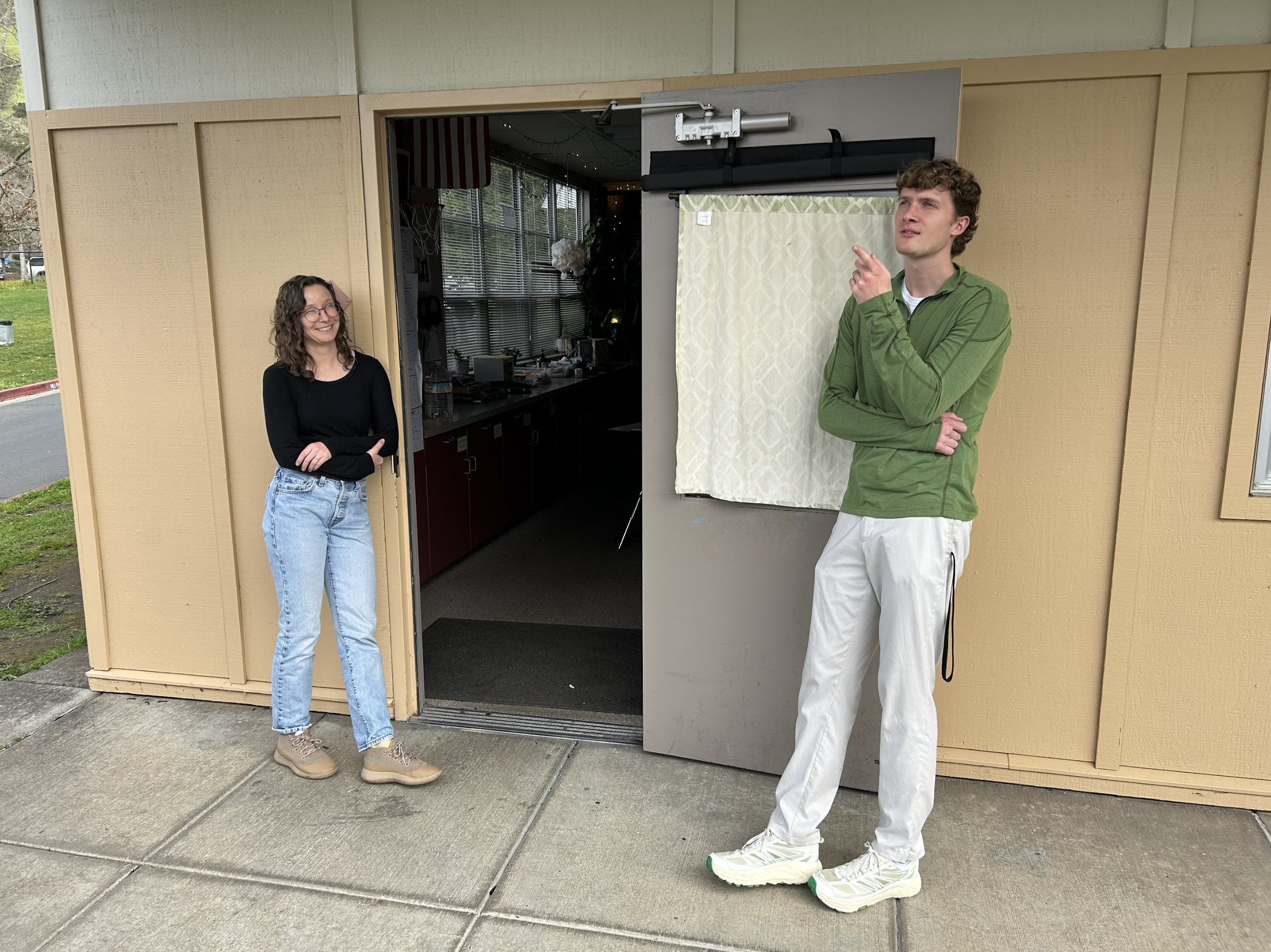
Doyle and Wade welcoming students into class (Henry Miller / The Puma Prensa)
By Henry Miller, staff writer
Teamwork makes the dreamwork, right? Here at Maria Carrillo High School, we have several pairs of co-teachers, including two special teachers that co-teach academic junior English. Chakra Wade and Maddie Doyle work together to provide a great learning environment for their two periods of Ethnic Studies English 3P.
Co-teaching describes the collaboration of two or more teachers in a single class. It’s known for being helpful for the special education department and combinations of general education students with those who have IEPs. One advantage of co-teaching is the ability to have one teacher teaching a lesson and the other offering individual help.
When it comes to Doyle and Wade, co-teaching is an opportunity for students to learn from adults interacting with each other. Wade stated that it's "beneficial for students" to see "adults working together.” Because their classes consist of a third to a half of students with IEPs, Doyle declared that with co-teaching, "every student has a better chance of succeeding.”
A study performed by Education Next found that elementary students with disabilities can have a boost of 2.6% in math scores when being co-taught. According to the Wheelock College of Education and Human Development, co-teaching "leads to test score improvements for both students with and without disabilities.” The Virginia Commonwealth University Autism Center found that there was a "[decrease] in referrals and absences" when co-teaching was present, providing a better work environment for students.
Along with student benefits, Doyle and Wade have also learned a great deal from each other. Wade, only being in his second year of teaching, remarked that he has learned "genuinely everything" from co-teaching with Doyle. Co-teaching offered him resources because "[he] didn't know curriculum" and he didn't have "this giant stash of assignments and books and knowledge" that Doyle provided. Overall, there are just "some things [he] couldn't do without her." Doyle, a teacher with a lot more experience, stated that Wade can help her relax when she's "really stressed out about [a] situation.”
A typical day in a co-taught class with Doyle and Wade is very "routine oriented.” Doyle describes a technique that they use called "station rotation," where students work on specific assignments and she and Wade split the students and help them individually. She also explains how they "strategize" and she "[checks] in with these ten kids and [he] checks in with X, Y, and Z.”
Doyle and Wade also find co-teaching to be a "hugely gratifying" experience. Doyle remarks that there's something "so joyful" about having a class of students and getting to "read their writing and see what they're doing and all the weird stuff they say...and having another adult to share with.” Wade admits to the fact that he's "a better teacher now than [he] was...three years ago" when he started co-teaching with Doyle.
The many benefits of co-teaching for both teachers and students is exemplified through the great work of Doyle and Wade. Unfortunately, due to budget cuts, co-teaching will most likely be cut next year. If you have any questions about how they operate or what they do, N8 is always unlocked.