
American food isn’t real
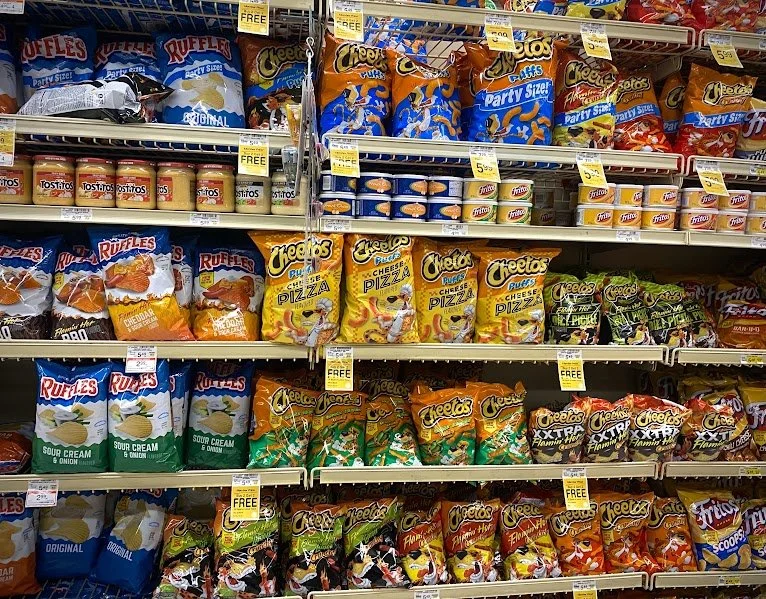
Image of bags of chips in a store (Bella Guerrero / The Puma Prensa)
Staff Writer, Bella Guerrero
As of October 2025, about 70% of the American adult population is clinically obese.
54% of calories consumed by Americans derive from ultra processed foods as of 2018, according to John Hopkins University. This means that over half the food eaten in America consists of artificial, industrially produced, and scientifically manufactured “food.” But why is such food everywhere and what health risks does it produce?
There are four different levels of processed foods: unprocessed or minimally processed foods, processed culinary ingredients, processed foods, and ultra processed foods.
Unprocessed or minimally processed foods: This category includes foods that are naturally found in nature like fruits, vegetables, nuts, grains, plain milk, eggs, and fresh meat.
Processed culinary ingredients: Butter, oils, white/brown sugar, honey, salt, spices, vinegars, and more. These foods are derived from products naturally found in nature that have been changed and formed into something else through techniques like grinding, pressing, pulverizing, or refining.
Processed food: Ham, cheese, bread, canned fruits and vegetables, bacon, purees, and so on. These foods have been altered from their natural state in order to extend shelf life and include techniques like canning or fermentation.
Ultra-processed foods, also known as UPF’s: These are foods that have been so heavily processed that it’s nearly impossible to make them at home and are typically made using industrial techniques and processes. This includes soda, chips, instant noodles, cereal, microwavable dinners, condiments, white bread, hot dogs and the majority of grocery store foods.
In order to make these foods, basic crops like corn, wheat, and potatoes are broken down to their molecular level and turned into starchy flours, proteins, isolates, oils, and fats. Manufacturers break down these foods, and turn them into what's called a slurry. Most of the time this is a starch slurry—a mixture of starch and water— and artificial flavorings and coloring are then added to these starchy compounds and heated, shaped, and pressed into hyperpalatable foods like hot cheetos, potato chips, and white bread according to CNN Health.
Consuming too much processed foods can lead to numerous health risks like obesity, cardiovascular disease, different kinds of cancers, and type two diabetes according to the American Medical Association. For many Americans, eating copious amounts of UPF’s is very easy for various reasons including hyper palatability, convenience, and cost. UPF’s contain many chemical additives, starches, refined oils, and fats added to them that make them hyper palatable and easy to over consume. They are chemically engineered to get you addicted to them, causing your brain to create dopamine spikes, reacting in a similar way to alcohol or nicotine. A study done by the Cleveland Clinic states that nearly one in eight Americans are addicted to highly processed foods, but it’s not only taste that leads to negative health effects from UPF’s, it’s cost as well.
Many households that are food insecure have a higher chance of becoming obese. While it may sound contradictory, nutritious and whole foods are far more expensive than their cheap, over processed counterparts. This cycle primarily affects women and children, often resulting in the children growing up to become overweight and contracting numerous health concerns from an early age like type two diabetes, sleep apnea, joint and bone problems, or mental health conditions.
The American food system is designed to get you addicted to highly processed, artificial food, keeping you coming back for more so you can spend more money on food that is destroying your health. The truth is, big name companies that sell us this food like Kraft Heinz, PepsiCo, and Nestle, don’t care about whether or not their products are beneficial to your health, they only care about exploiting their consumers just enough to make another buck in their pocket.