
The hidden side of gloving
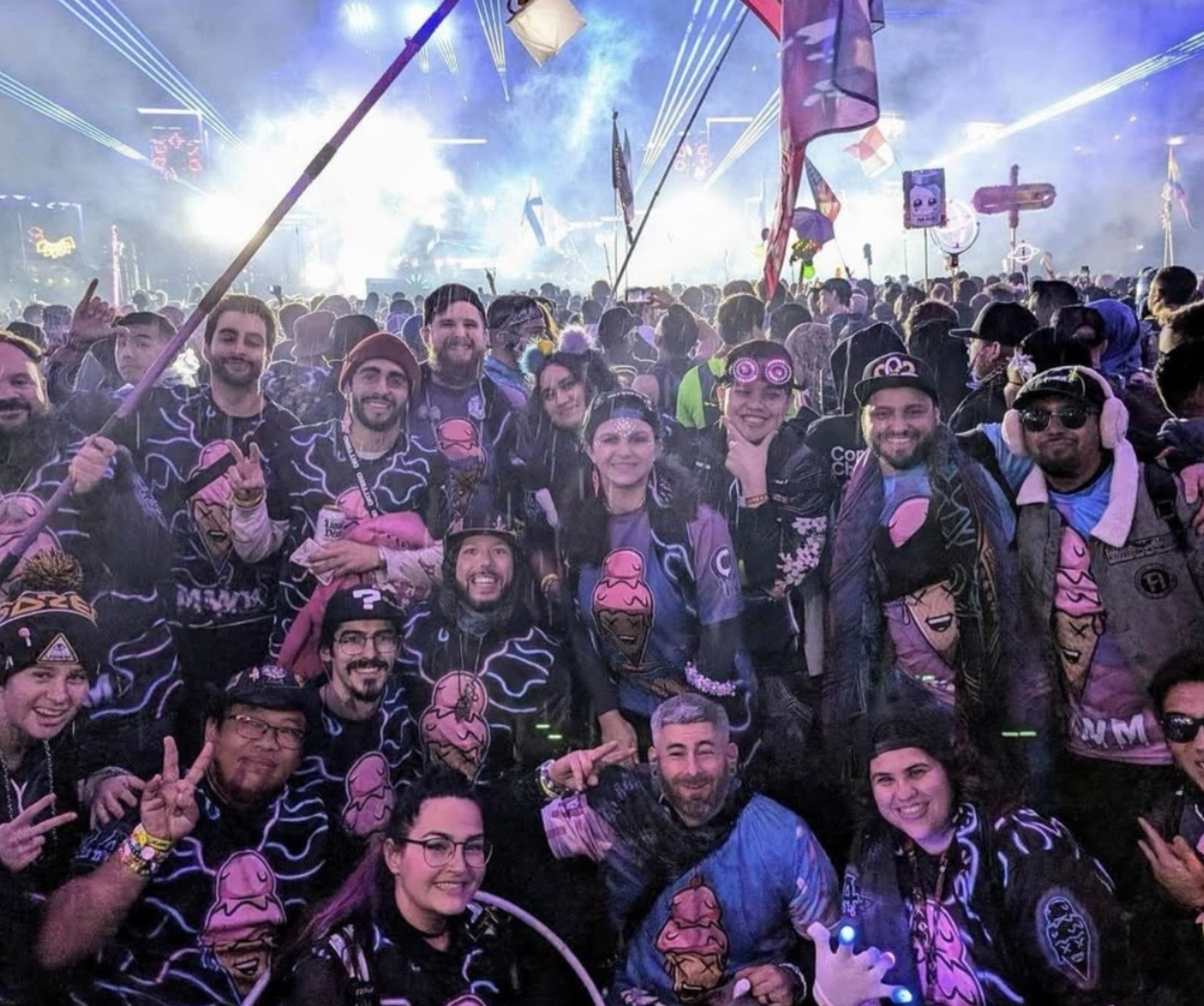
Photo of glovers at the Dreamstate SoCal Music Festival, 2024 (Photo courtesy of Cristinamz)
By Esmond Hoang, staff writer
“Gloving is the most dangerous sport in the world,” is a phrase common across social media that exposed most people, including Maria Carrillo High School’s students, to gloving last December, but what is it really about?
Gloving is considered a dance that involves competitions with an immense history spanning across decades. It involves mesmerizing and smooth movements with the glover’s hands. These precise finger movements can help exercise dexterity and control.
Once they perfect this, it is time to wear the gloves. These gloves have an LED attached to the end of each fingertip and they match the rhythm of a song.
Gloving began with Greg Irwin, who is known as the original glover. He saw the value of finger exercises and taught them to the elderly. He popularized the idea of these movements. However, he isn’t the reason for the lights.
The precursor to gloving was when people experimented with waving lights around as a performance. These light shows would involve heavy electronic music and became raves. Naturally, the idea of gloving became a part of the raves. In the 2000s, gloving as we know it came into the world, and the community began to grow.
In 2010, a pillar of the gloving community rose: EmazingLights. It was a company started by Brian Lim. His story and the story of the company began as a glover selling gloves in his car, appearing on Shark Tank, and then the downfall of EmazingLights. This company held gloving competitions, sponsored many gloving creators, and helped build the community.
Disaster struck when the Concert and Music Festival Safety Act banned gloving at certain festivals and raves. One of the reasons was that people believed gloving was connected to drug usage. This was due to gloving being highly popular in the rave scene, which had problems with drug control.
Another reason is that when gloving was performed, the audience would sit to watch, which could be a hazard in large crowds. However, the true spark was when Sasha Rodriguez, a 15-year-old, died at one of these events in LA. The cause of death was due to drugs.
This tragedy painted a negative picture of raves and gloving became a scapegoat for her death. EmazingLight formed IGC, International Gloving Competitions, as a response. Other companies started forming competitions as well, like BOSS, Battle of Supreme Swag.
During these competitions, the glover would take turns performing their light shows for their opponents. The judges would then evaluate your performance. Glovers would use different techniques, like infinite staircase, whips, and more. Winning these competitions would have cash prizes and usually qualify you to compete at IGC.
a glover influencer and professional known as Cristina, spoke of her experience. "Competitions were always very hype, especially since it brought so many glovers together in the same room.” “I've met some incredible people that are still in my life today,” she remarked about the community.
A second disaster was the Coronavirus pandemic. All in-person competitions were halted, and that made it harder to bring new people into gloving or make friends with other glovers. There was even a chip shortage as well. Without their main way to bring more people in and because of problems receiving supplies, they have to close up by 2023. Even with this massive loss to the community, gloving would still come back.
At the end of 2025, gloving became an internet trend all over social media. The sport may seem silly to outsiders, and as a result, a wave of new people parodied it. Part of gloving's newfound popularity and parody is also the term "degloving,”which is a horrible and often life-threatening soft tissue injury that happens when skin and tissue get detached while muscle and bone stay.
In contrast to this horrific injury, this term also means to be banned in the gloving community, which people online found funny. Although people mocked gloving, the engagement introduced gloving to people and helped gloving creators like Cristina and Infinepuppet.
Cristina said, “People make fun of it, but a few actually get intrigued; it’s kind of a win for gloving.” Many students at Maria Carrillo High School mentioned that they discovered gloving through Instagram and even learned moves like the infinite staircase.
Even though it is relatively young compared to other forms of art, gloving has a passionate community that has a broad cultural impact. They inspired the spell choreography in Doctor Strange, the opening theme of a Chinese show, Link Click, and even a short film called The Glover. Starting this new year, gloving is still on the rise, and maybe even more MCHS students will give it a try. Cristina states that “Gloving changed my life as any other hobby can. It makes you feel a part of something bigger, and you meet some of your best friends.”