
Black Swan: a fragile horror as pretty as a picture
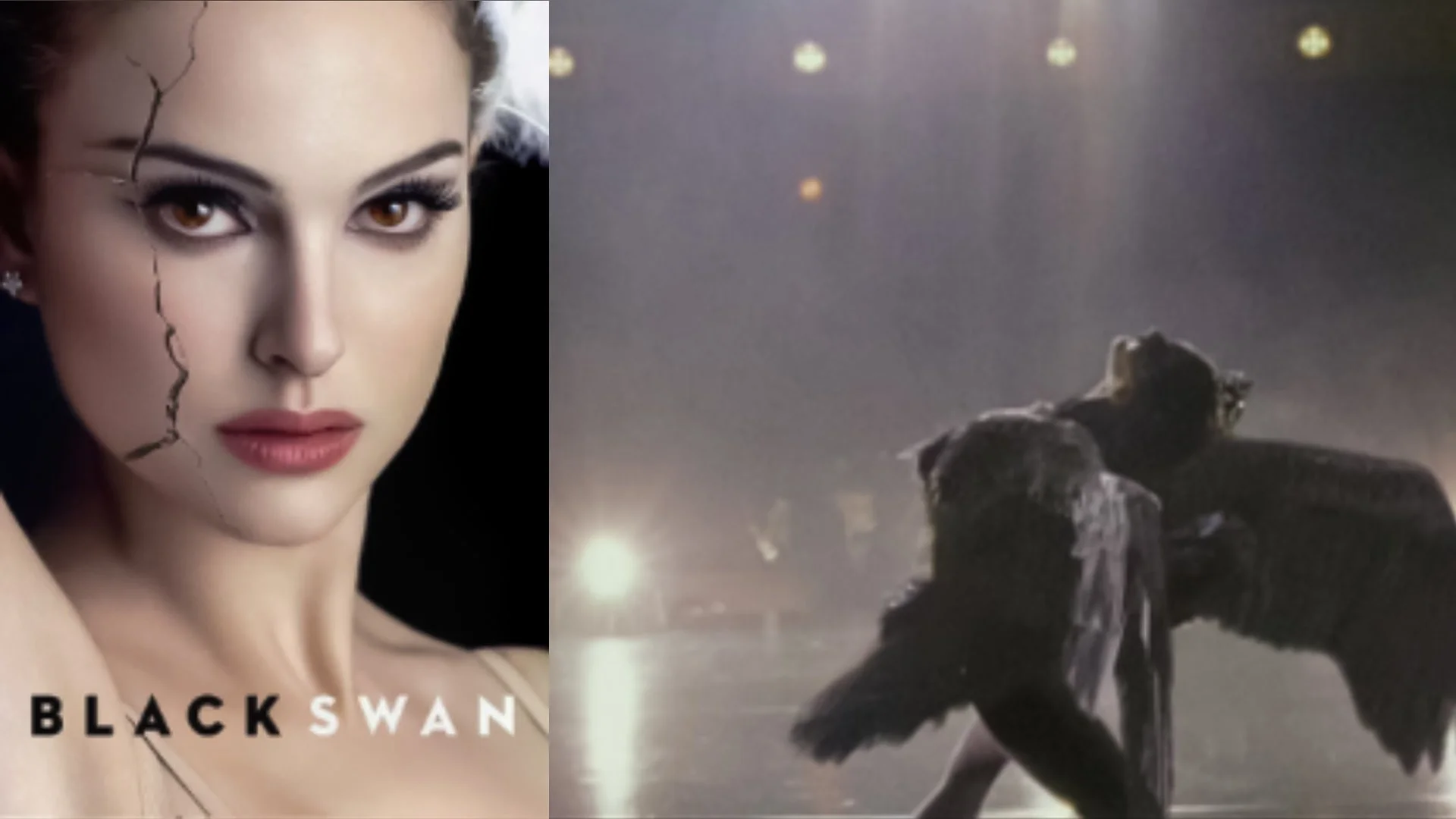
Black Swan (2010) movie poster (20th Century Studios)
By Ruby Costa, Co-Executive Editor
The 2010 psychological horror Black Swan is a masterpiece in countless ways. Everything from the cinematography to the Oscar-winning acting culminates in a unique, artistic experience, and it's something all people should watch at least once in their lives.
The premise is simple; a talented, up-and-coming ballerina gets cast as the lead in Swan Lake and slowly descends into madness over her obsession with perfection. Natalie Portman portrays our lead, Nina Sayers, and captures the tragically beautiful desperation of an artist devoted to their craft. Quite impressively, Portman did much of the ballet dancing throughout the film herself after a year of grueling training. However, American Ballet Theatre soloist Sarah Lane did work as a body double for certain scenes. In 2011, Portman won the Best Actress Academy Award for her role in Black Swan, and now, the movie is widely revered as a modern classic for both its horror elements and the hard hitting topics that bleed into the plot.
I fell in love with this movie the very first time I watched it, and it’s certainly among my favorite horror films. To me, the impressiveness of this movie comes from the combined effect of wonderful cinematography, acting, costume design, a beautiful music score, and, most importantly, the duality between in-your face-horror and disturbing undertones that comment on everything from the toxicity of the ballet industry to the deflection of trauma onto children.
You hardly need to watch a minute or two to realize that this movie is visually stunning. The colorgrading, shadows, and camera angles deliver every tone shift and emotion flawlessly, and the ballet choreography is a treat to look at– though I’m not a ballerina myself, and I’m unsure exactly how accurate it is. It's hard to make a movie about ballet ugly, as the sport is inherently gorgeous, but there's just something so ethereal and feminine about this film that pushes it beyond expectations.
Nina is developed beautifully as a character through her costume and room design; her innocent, girlish aesthetic contrasts the dark reality of her struggles, and I found it to be an interesting commentary on how young girls are forced to grow up too fast in order to perform like perfect show ponies in sports like ballet or cheer. I’m a big fan of Nina’s late 2000s and early 2010s outfits in general, and how, as she becomes more and more obsessed with her role, her wardrobe becomes full of blacks and neutrals rather than powder pinks and whites.
One of my favorite aspects of Black Swan is the music, which consists almost entirely of swelling classical sounds and songs straight from the famous ballet. The music in Swan Lake is famous, but it's given a fresh new life in this film. A musical choice that I absolutely adore is how, in moments of suspense, dramatic classical scores are used instead of generic, tense horror music that you’d find in almost any other psychological film.
If you’re squeamish when it comes to scary movies, I still think Black Swan is worth the watch. Like most other psychological horror films, the scariest themes or concepts in Black Swan are non-tangible things that, though they might mess with your mind, likely won't give you nightmares. The best horror aspect is the slow build of suspense as the movie progresses. If you went into Black Swan blind, unaware that it was a horror film, it would take you a significant amount of time to puzzle that out. Hints start subtle, with eerie split second shots and small moments of injury– perhaps a split nail, or odd scratch. You as the viewer descend into madness with Nina, slow and thoroughly confused as to what is real and what is fake. The film makes you question each scene, and by the time you reach the climax, you’ve gone through a realistic, seamless, and honestly horrifying transition from a bright eyed and bushy tailed ballerina to a disturbed, pitiful schizophrenic.
Another key theme within Black Swan is delivered by way of explicit innuendos; Nina being taken advantage of and, larger still, the exploitiveness of the ballet industry. This could be interpreted more literally, as in sexual exploitation, or broadened to discuss the harmfulness of female competition and how companies will push dancers to their breaking points for perfection, even if perfect does not exist.
After a near two hour runtime, you’ll be rewarded with one of the best climaxes in any horror film I've ever seen. Everything pays off in the most disturbed way possible, and with an ambiguous ending–that has sparked many, many fan theories–its almost like the movie never ends.
Whether you are a horror fanatic, ballet dancer, or anything in between, I truly believe this film has something to offer for everyone. Though, forewarning, this movie may leave you with the overwhelming desire to buy tickets for Swan Lake.