
Inside the tanks: the secrets of Santa Rosa Aquarium
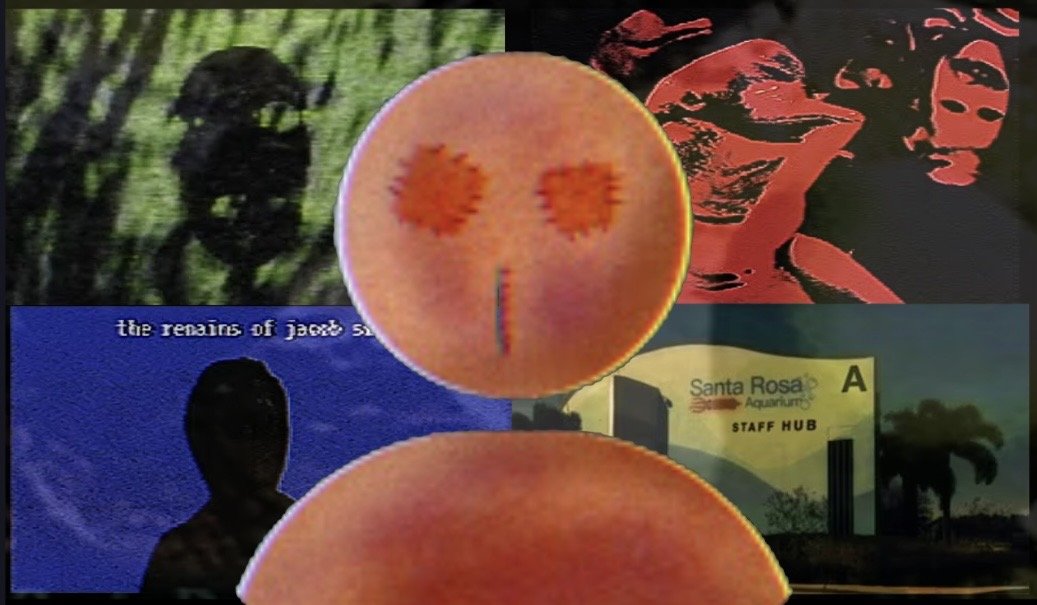
Collage depicting Squak Production’s logo and several thumbnails of Santa Rosa Aquarium Videos (Lily Peltz / The Puma Prensa)
By Lily Peltz, Staff Writer
You were minding your own business one day when you overheard some people say something about an aquarium in Santa Rosa, which piqued your interest. You were immediately excited by the prospect of having an aquarium right here in your home city, and so, like any curious soul would have, you Googled it.
But your research sends you down a rabbit hole that just keeps getting weirder; the aquarium is laced with tragedy, death, and a string of mysterious events all centered around a specific area of the aquarium, Sector C, which has been closed to the public ever since it caused three guests to lose their lives in a single week.
You also realize that if you want to go to an aquarium, you’re still going to have to drive to Monterey, because what you’ve found is an analog horror called Santa Rosa Aquarium (SRA), created by the YouTuber Squak Productions.
An analog horror is a type of horror story portrayed through the imitation of vintage physical media, like VHS tapes, cassettes, and footage from old cameras. SRA utilizes this format through employee training tapes, recorded phone calls, advertisements, and footage taken by guests and employees.
SRA differs from many other modern analog horrors in three main ways: its setting, its subtlety, and its quality. There are hundreds of analog horrors on the internet, with a wide variety of settings, but SRA is one of, if not the only one set within an aquarium. The setting lends itself very well to the horror elements, with the dim lighting and monotonous drone of the filtration system providing a uniquely off-putting atmosphere. The series absolutely makes use of the inherent horror that comes with the deep sea, and the unnatural pursuit of trying to contain it for human entertainment, in a way not many other series’ can.
When it comes to subtlety, SRA does a much better job than many analog horrors, which tend to rely on gory and disturbing images, loud jumpscares, and shock factor to scare the audience. SRA instead uses its disquieting atmosphere and subtly disturbing visuals to build up a mystery along with its horror. It uses overtly scary and gory imagery sparingly, making moments where the horror is portrayed directly really shine. It puts you in the dark, enclosed aquarium, surrounded by creatures that should have remained in the depths of the ocean, keeping you on the edge of your seat until the rare moments you get a glimpse of the real horrors lurking in the depths of the tanks.
SRA is also better than most analog horrors when it comes to quality. As a genre, analog horror is often seen as lazy or cheap because of the oversaturation that comes with how easy it is to create. On this topic, the creator of the series, who I’ll call Squak, had this to say: “I think analog horror was such a great concept because it’s very easily accessible… you just need a phone at a minimum.” While it’s good that so many people can create this type of art, it also has its drawbacks.
It often leads to many horrors with the same format and style. Anyone can edit a stock image to look scary, anyone can use a text to speech generator with an uncanny voice, and anyone can put those together and, boom, they have an analog horror. Because of the ease of this process, it’s rare that an analog horror will go beyond what is expected for the genre.
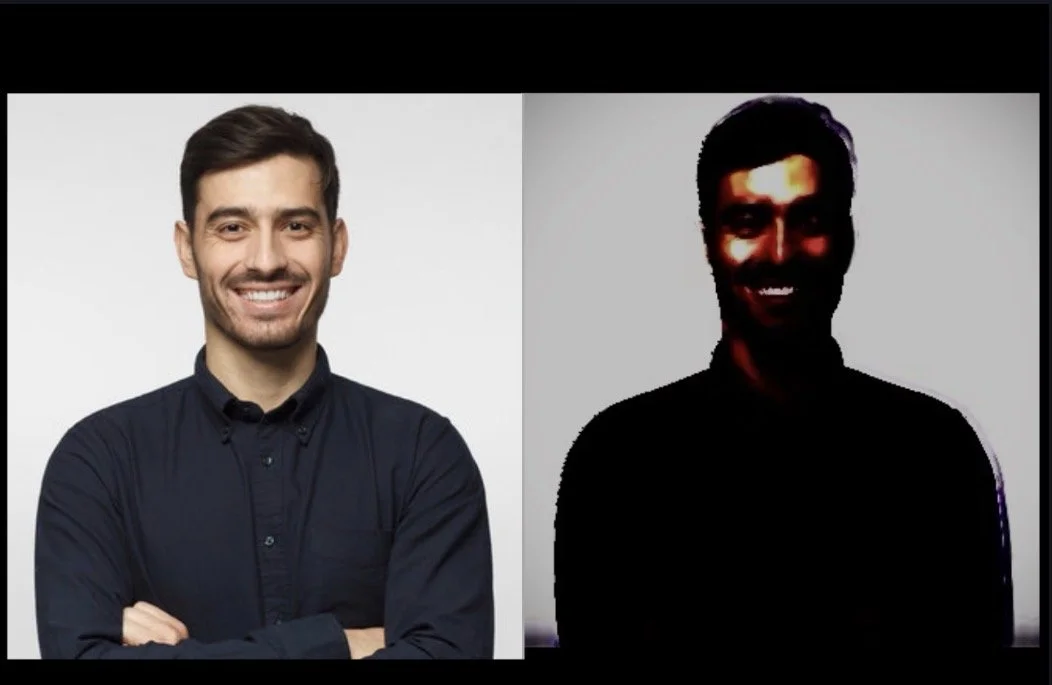
A stock photo turned into a horror image, created in 10 minutes using the editing tools on the iPhone camera app (Lily Peltz / The Puma Prensa)
Initially, SRA did fall into this pitfall of “sameness” with the format, but that has changed dramatically since the release of a new video about the Hall of Whales, which showcases a fully rendered 3D environment instead of the typical, played out informational tape style all the prior videos had.
Another one of the most recent videos, “The Boy from the Pipes,” has by far the highest scope yet, marrying the style viewers are used to and the new 3D elements, to create a far more immersive experience than any of the other installments so far.
When asked about the new style, Squak had this to say, “it’s more fun to make and it’s better in my opinion,” so fans can expect this higher quality to become the new norm for the series.
The viewers seem to agree with the fact that the new format is better, as the comments on the newest video are resoundingly positive. Many praised the switch to 3D environments and the improved voice acting and dialogue, and there is lots of hope and excitement to see how the series would continue to improve in the future.
It also has the bonus of being made by a real human being. Squak prioritizes keeping SRA as a human creation free of generative AI. He makes all of the art for the series himself, and uses real human voice actors. His feelings are best seen in his Tiktok bio, which reads “No AI slop.”
So, if you are at all interested, it’s totally worth it to spend a short bit of your day on an up-and-coming human made analog horror, with an atmosphere that will make you claustrophobic in all the best ways, and a sense of mystery to keep you hooked.
The whole series has a combined run time of about 20 minutes, and the first 8 videos are all conveniently collected into one 10 minute volume available on his YouTube channel. Santa Rosa Aquarium is only getting better as time goes on, so check it out and see what you think.
Oh, and P.S., always remember, THERE IS NOTHING UNDER SECTOR C.