
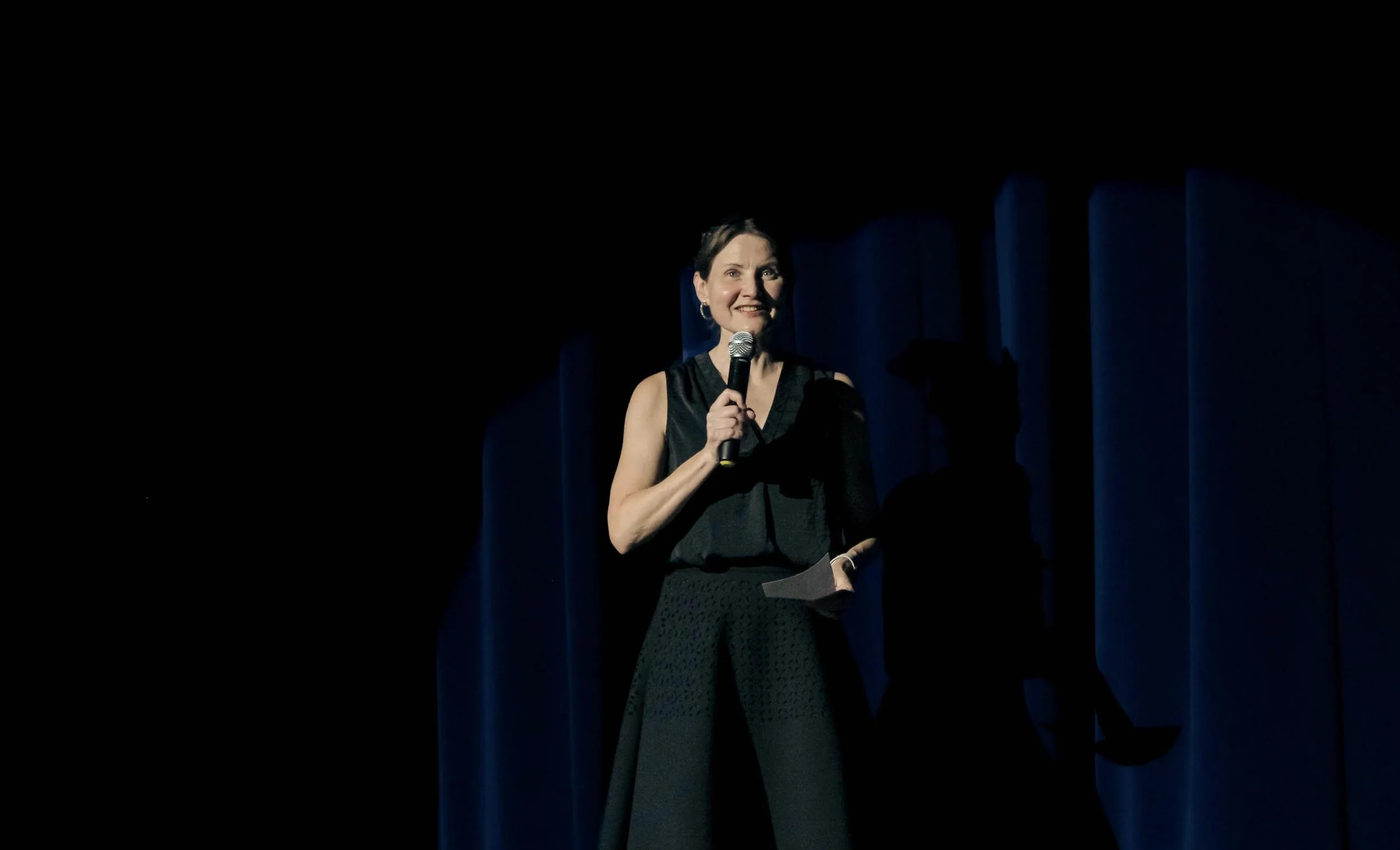
Photo of Rosemarie Henry at a dance show (Photo courtesy of Rosemarie Henry)
By Lauren Chavez, Features Editor
Maria Carrillo High School is home to an incredible arts program called Encore that serves as a school family to over 90 students. One of the biggest segments of Encore is the dance program, which is split into multiple classes: Ethnic Studies/Beginning Dance, Intermediate Dance, and Advanced Dance. Students participating in these classes have the opportunity to perform in shows throughout the year, with the winter and spring shows being almost entirely student choreographed.
Even though there is such a high level of student involvement in Carrillo’s dance classes, they wouldn’t be nearly the same without the guidance of our long time dance teacher, Rosemarie Henry. She guides these three classes today with the same leadership, poise, grace, and positive attitude that she has been bringing to our school for twenty three years. I sat down with Henry in her small but cozy office to talk about all things dance and to discover what has kept her so passionate about the art of dance education for high school students for over two decades.
Henry has been involved with dance since she was six, growing up in the East Bay. She remembers asking her parents if she could begin ballet classes, which she did for many years before dancing in college. Even though she tried a few other dance styles in college like jazz and modern art, she feels that ballet has shaped the dancer she became the most, and when she choreographs, that’s the part of her that shines the most. After she graduated, she taught science in Sacramento, then returned to college to pursue a second major in dance in order to become a dance teacher. Something unique to Carrillo’s dance program is how much of the choreography is created by the students, which is something that Henry has found “refreshing and fueling” because she gets to witness their passion and creativity blooming before her eyes. In her words, being able to see the love that her students have for dance “creates a synergy.” Henry added that she loves seeing students expressing themselves through dance and “growing in their artistic voices and sharing their emotions, thoughts, and ideas through movement.” She also loves that dance is both artistic and athletic, so aside from telling stories and creating art through your movements, you also get exercise out of it, doing good things for both your mind and your body.
Because the dance world is constantly changing, especially in dance education, Henry attends a dance teacher convention every summer to learn new ideas about dance methodology and different dance styles that have become more popular. She added that, “over time, different things have been emphasized, de-emphasized, and things like that, so I just moved along with what other dance educators are doing.” This input from other teachers translates into other aspects of her classes as well. For example, the junior dance club program that Carrillo recently began offering was an idea that Henry got from a teacher at another school.
Although most of the dances are student-choreographed, Henry has choreographed some pieces, and when asked what she’s gotten out of her own choreography, she brought up a piece she created last year as a reflection on the school closures. Through this piece, Henry really got to experience the comfort dance can bring as it was “therapeutic to me because I was able to express all of my emotions that surrounded the potential school closures.”
Ethnic Studies Dance is a newer course that has been around for a few years, and teaching this class has definitely been an adjustment for Henry, but has also broadened her repertoire and given her the feeling that she’s learning alongside her students. As she said, “we’re all broadening our horizons together in terms of dance culture and movement style.” With the addition of this class, it’s become easier for more people to become involved in dance, especially because students are required to fill an Ethnic Studies credit in order to graduate. Henry believes that getting involved in dance is beneficial for everyone, even if they don’t intend to become an advanced dancer or go professional. She added that everyone can find something they can connect with when taking dance, whether it be collaboration, partner work, growing in their own expression of stories or emotions, or even just moving their bodies in new ways. From her students, she’s learned the lesson of perseverance and patience, for herself but also for her students. She loves encouraging students to be patient with themselves as they learn new things, and she feels encouraged when students ask questions such as “Can we try that one more time?” or “Let’s do that one again.”
In order to better understand what has kept Henry connected to dance for so long, I asked how she felt dance connects her with her environment, to which she responded that she visualizes and thinks about things in movements instead of words, which deeply affects her world perspective and the way she lives her life. The advanced dance alumni are important to Henry and to the program, and they lovingly refer to Encore as the “dance family.” She loves getting to hear about the experiences they have post-graduation, whether they go on to be part of a college dance team or another way they’ve continued to involve dance in their life. She believes that even if she wasn’t teaching high school dance, she would still be involved in dance in some way, whether that be teaching at a studio or continuing to dance for herself. Either way, Henry can’t imagine herself anywhere else and knows that dance is where she’s meant to be.