
How we see the world: information in a modern age
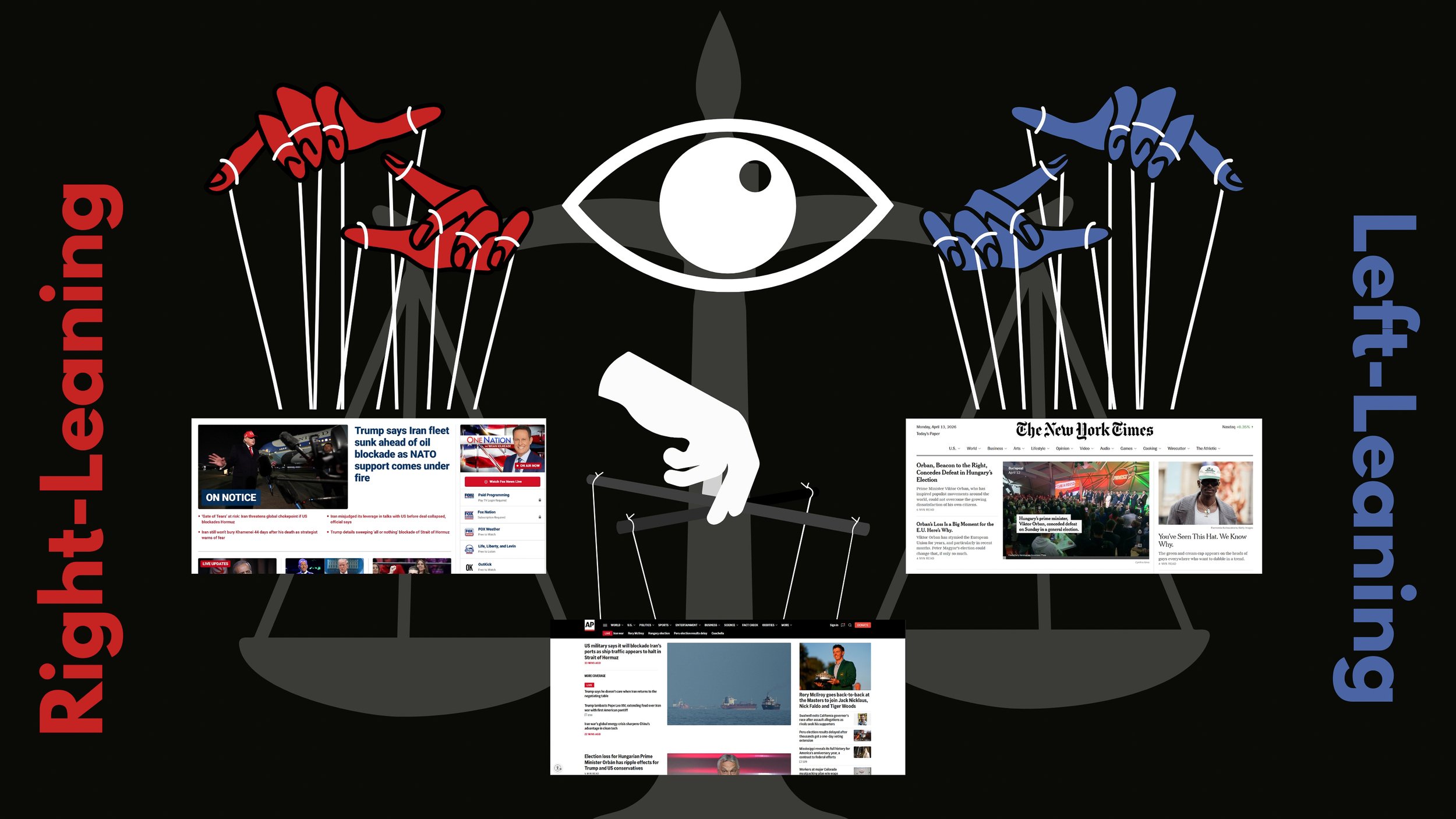
Graphic demonstrating the dichotomy between political directions and there use of the media (Ryan Win-Ruan / The Puma Prensa)
By: Ryan Win-Ruan, News Editor
Amidst an extremely dynamic and ever-shifting global climate, it can be hard to find reliable, trustworthy sources. The increasing influence of political and corporate bodies has created a major source of bias that continually leaks into media and news outlets, turning information and trust into a new form of ideological control.
According to Daniel Videna, a sophomore at Maria Carrillo High School, “people miss out on a lot of details about news, they consume it as a graphic rather than something to read and understand, it leads to people being less well informed.”
Because of the extreme levels of misinformation and the ease with which it can be accessed, most people have begun turning away from most popular news sources, but no longer have many reliable places to get information.
Most sources either lean “left” or “right,” which represent the liberal and conservative poles of politics, respectively. According to analysts, left-leaning sources include The New York Times, The Washington Post, and CNN, while right-leaning sources include Fox News, The Daily Wire, Breitbart, and Newsmax. They generally cater to a certain political audience, creating news that often portrays their ideological backers in a positive light.
However, with the rise of social media, certain platforms have begun to take on the role that news organizations formerly held. Although social media’s popularity allows for much more widespread and diverse opinions and experiences to be shared, the lack of misinformation regulations creates a much larger potential for incorrect and even dangerous ideas to spread.
Although many platforms contain reputable reporters and sources of information, it is also important to remember that not everything is entirely reliable. In fact, with social media especially, profit and engagement are key motivators for many content creators, which can drive many to deliberately create controversial videos and essays to grab attention.
As Videna says, “Social media is usually unreliable and biased, especially if the person [creating content] is more interested in clout…the need for clout increases the biases being portrayed in news”. He also feels that this problem is amplified by the fact that news outlets are becoming “less relevant, considering that viewership is declining”.
There is also concern about the sheer amount of information being released on both social media and increasingly globalized news networks, and according to Videna, “the more dilution there is, the harder it will be to get news”.
Despite the worries, there are still a few sources which can be regarded as highly trustworthy. Associated Press (AP) News is universally regarded as one of the most reliable sources of information, as are the Pew Research Center and Reuters, all of which have decades of history and credibility behind them.
The world is ever-changing, and although news can prioritize agendas over facts, the one thing that can never be changed is taking personal responsibility for what we consume. Checking sources is more vital now than ever before, and it is important to remember that how we see the world is influenced by the information we receive.