
The largest video game market crash in the world
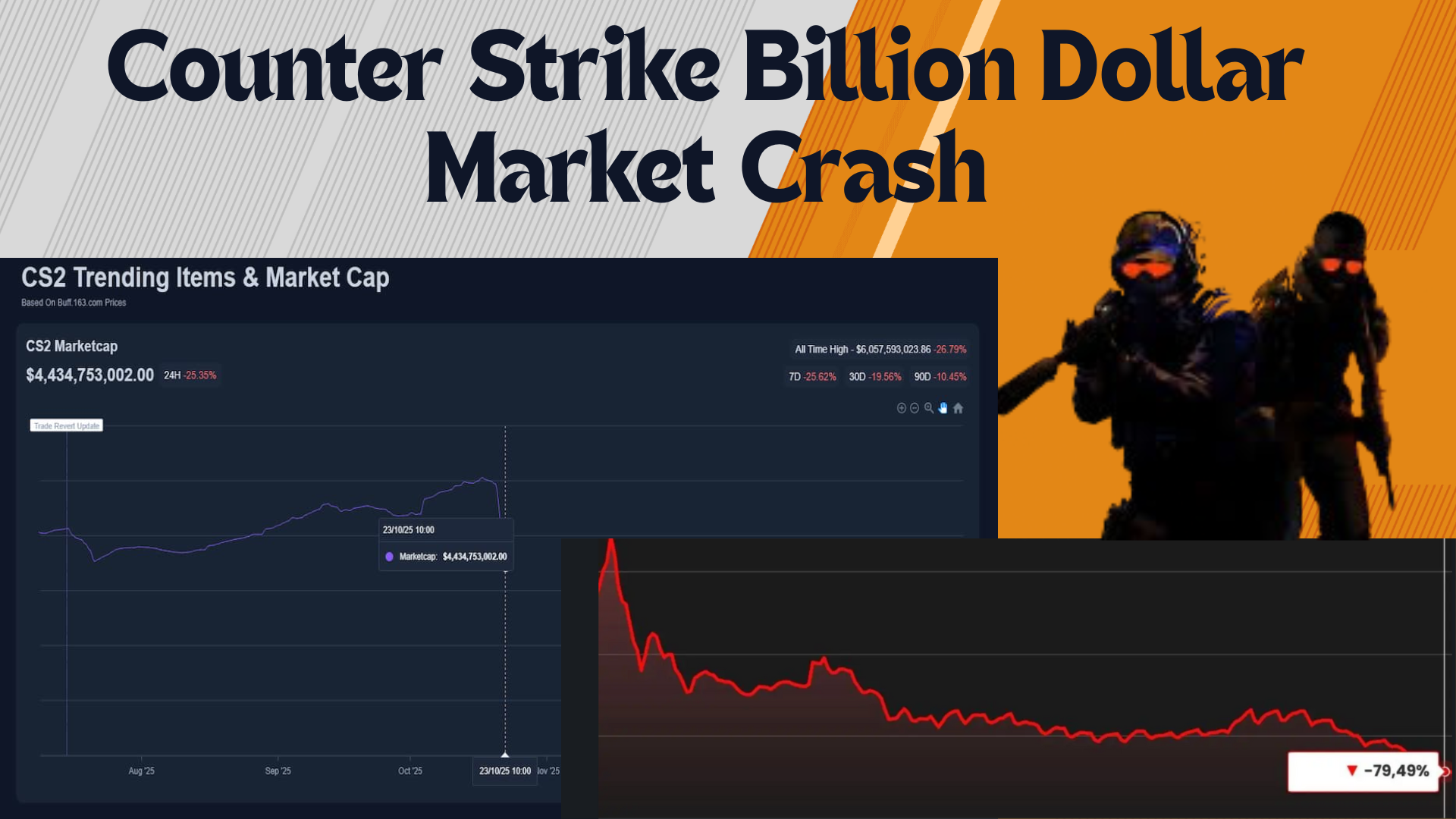
Canva image featuring market-cap graphs (Chase Soylu Chee/The Puma Prensa)
By Chase Soylu Chee, News Editor & Video Editor
One of the most infamous first-person shooters in history has been thrust onto the world stage for something other than gaming: a $2 billion virtual market crash.
Counter-Strike, a first-person shooter (FPS) video game series with the biggest name in the genre, has gained national attention for its virtual market crash.
The newest installment, Counter-Strike 2 (CS2), is an optimized version of Counter-Strike Global Offensive (CSGO), and has virtual skins for items through a case-opening gambling system.
There are eight tiers of skins with varying percentages to unbox, with cases fluctuating from $0.30 - $2,000 and keys usually costing $2.49. Players must gamble to get rare skins. Cases, skins, other vanities like stickers, sprays, and the newest addition, charms, can be traded, used, or, most commonly, sold on the Steam market for currency.
Taking advantage of this, Counter-Strike developers have prioritized making skins with unique patterns. Famously, a case-hardened AK-47 skin with a “Blue Gem” pattern dubbed “661” has sold for over $1 million for its rarity of 1 in 8.93 million cases, making this the largest video game purchase in history.
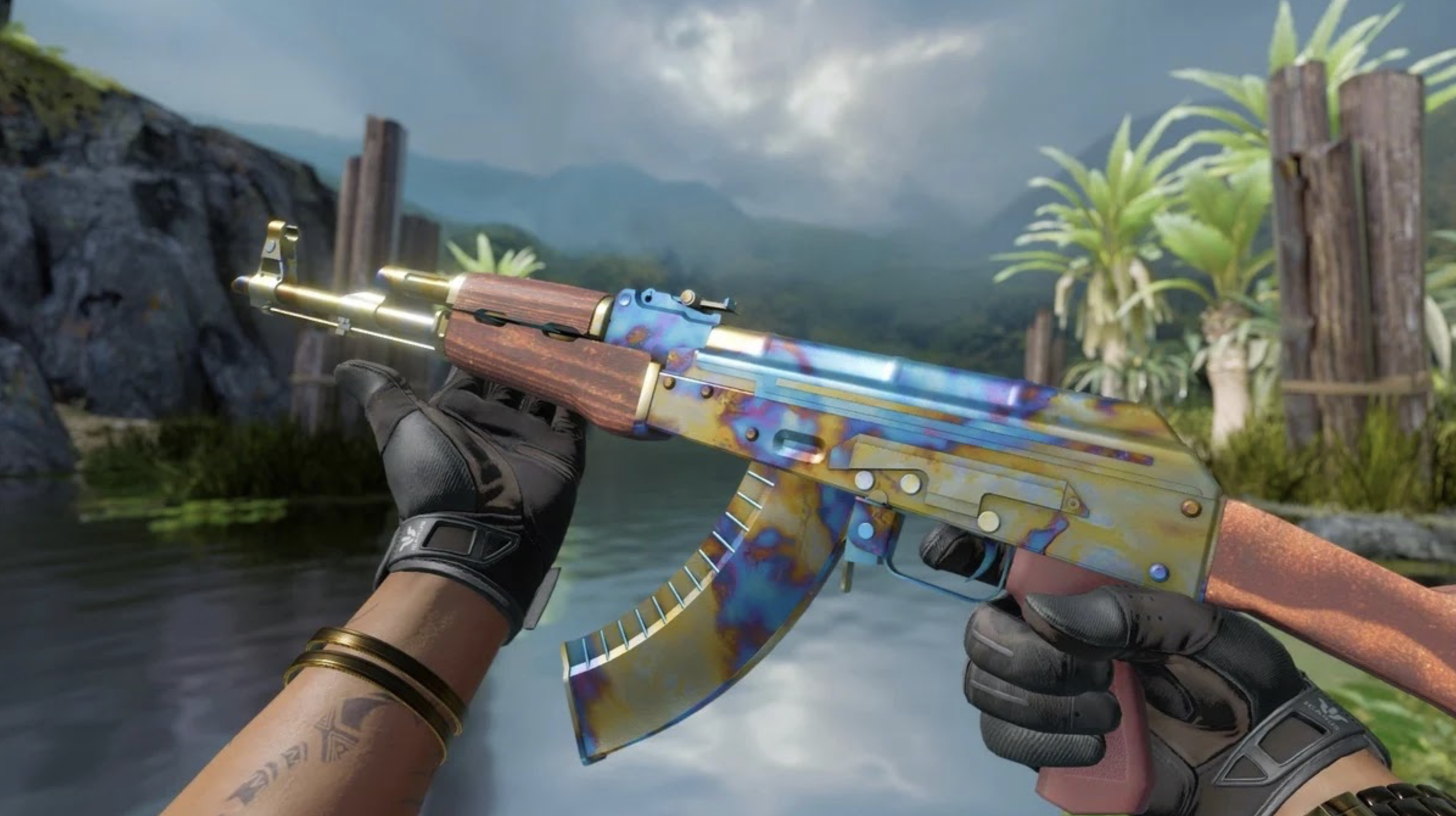
AK-47 Case Hardened Blue Gem Pattern 661 (Hotspawn/The Puma Prensa)
The goal of opening cases is not for gun skins but for knives and gloves. Unlike skins that are put on guns, some knives are their own tier. The golden tier, which is 0.26% or 1 out of 390 cases, gives you a knife. For this reason, knives sell for a minimum $100, with the rarest knives with good skin patterns going for up to $5,000.
Knives were not obtainable without buying or unboxing them through cases until Oct. 23, when developers allowed five “covert” tiers –the highest tier of gun skin– to be exchanged for a knife through the in-game “Trade-Up Contract.” Due to covert items being hundreds of dollars cheaper, trading up to more expensive knives became affordable.
Overnight, a video game market that once peaked at $6 billion had an exponential increase in supply of knives, depleting the value of knives. Followed by a massive sell-off, a crash occurred which wiped $2 billion from the market, decreasing its cap by 28.1%.
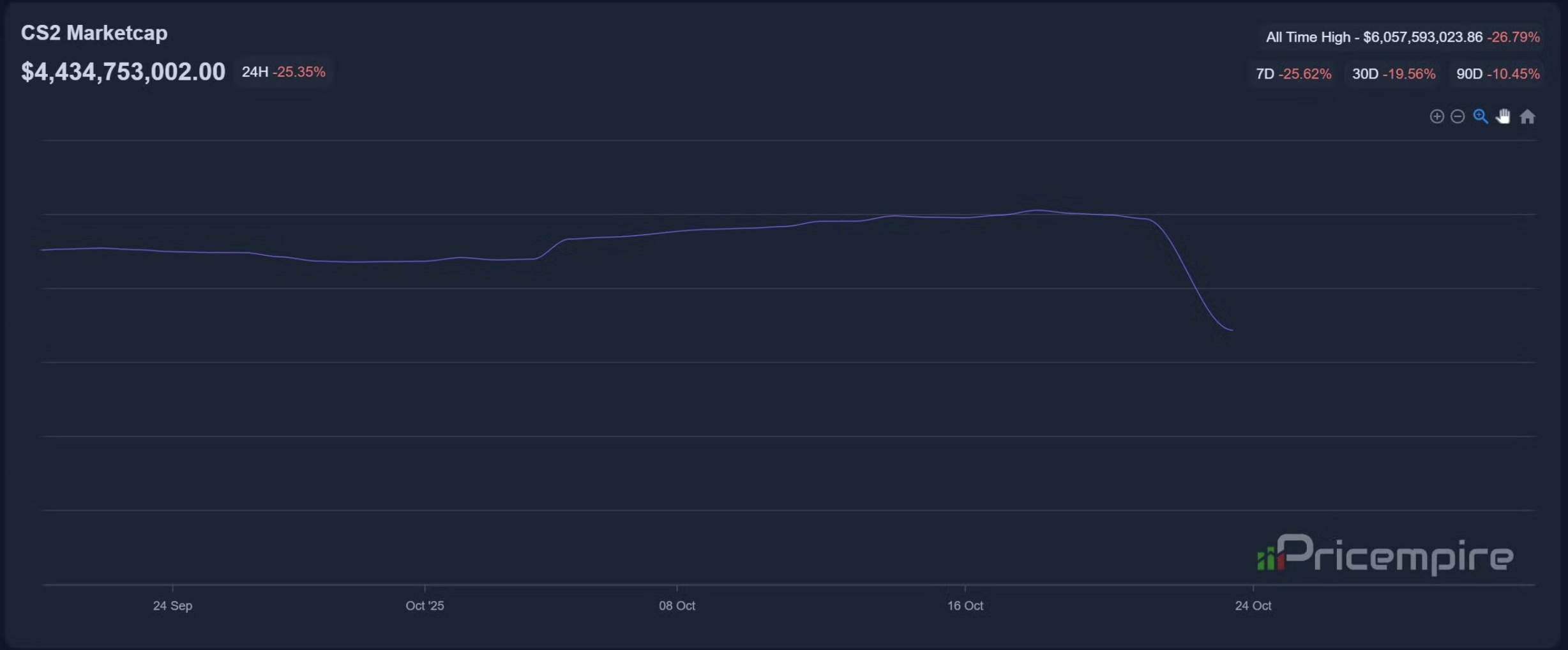
Graph representing the CS2 Market Crash through the massive drop in marketcap (Pricempire/The Puma Prensa)
While market crashes have historically caused great unrest, the majority of the playerbase felt this was a positive. Most players could not obtain a knife due to not wanting to risk gambling or spending hundreds of dollars for a virtual item. Being able to obtain it more easily has led to great reception for the newest update.
As a globally recognized series, students throughout the Santa Rosa City Schools District play Counter-Strike 2, including some traders and rare item holders.
Analy High School senior Bryton Mansell, who has been a Counter-Strike player for several years, was working his way up the market to get a knife. The day after the market crash, Mansell was able to score himself a Doppler Gut Knife for about $100 off for a total of $147 after the market crash.
Mansell found the market crash to be an overwhelmingly positive change for the game. “Anyone can afford a knife because knives are so cheap now. The cheapest [knife] is like $50 and it used to be $150,” said Mansell.
“People with money still have a chance to make money, because there's still a major profit,” says Mansell. With covert tier weapons prices rising due to the update, there is still a viable money making market.
Looking back at the major change, Mansell is not concerned about the developers’ influence in the multi-billion dollar market. “They shouldn’t let the market dictate what updates they want to make, they should be able to do whatever they want… It’s their game,” said Mansell.
Other students who interacted with the market declined to comment. One remarked that they were grateful they sold off their inventory before the crash occurred.
Counter-Strike’s market, like other leading corporations in the online economy, highlights the major changes that trading and virtual monetary value can see in the future. Questions on how marketplaces like Steam can influence virtual economies or what rights traders and people have on market changing updates are sure to be major topics down the road.
Ultimately, Counter-Strike’s legacy as one of the greatest shooter, e-sports, and industry defining series has been untouched. As the industry leader, only time will tell what road developers will take to capitalize or redefine industry standards for the multi-billion dollar marketplace.
Chase Soylu Chee has monetary value in the Steam marketplace.