
The science behind stress

Various causes and symptoms of stress (Ryan Win-Ruan/The Puma Prensa)
By Ryan Win-Ruan, News Editor
As the first semester’s finals week comes inching closer, many students are feeling the pressure. And with the immense weight of tests and projects, some students may find themselves with an all-too-familiar feeling: stress.
Originally meant as a term to describe the physical strain placed on structures, “stress” was later broadened into a general synonym of pressure. In modern vernacular, it has now come to be largely associated with mental health, especially as a biological reaction to the “fight or flight” response which triggers in dangerous situations.
Stress comes with a large host of symptoms, especially when people are exposed to it for prolonged amounts of time. This includes but is not limited to: self-isolation, irritation, headaches, muscle tension, fatigue, chest pain, anxiety disorders, a feeling of being overwhelmed, and depression.
Research into mental stress was largely pioneered by scientists like Hans Selye, who created the General Adaptation Syndrome (GAS) model of stress, and Walter Bradford Cannon, who researched homeostasis and emotional psychology, laying the groundwork for symptoms and causes of stress.
The Stress Continuum is a standard way to categorize different levels of stress, and is an effective way to find what is healthy and what is not. Generally, a small amount of stress is healthy and increases production, but higher levels of stress can begin to have negative effects on a person’s wellbeing, especially with prolonged exposure.
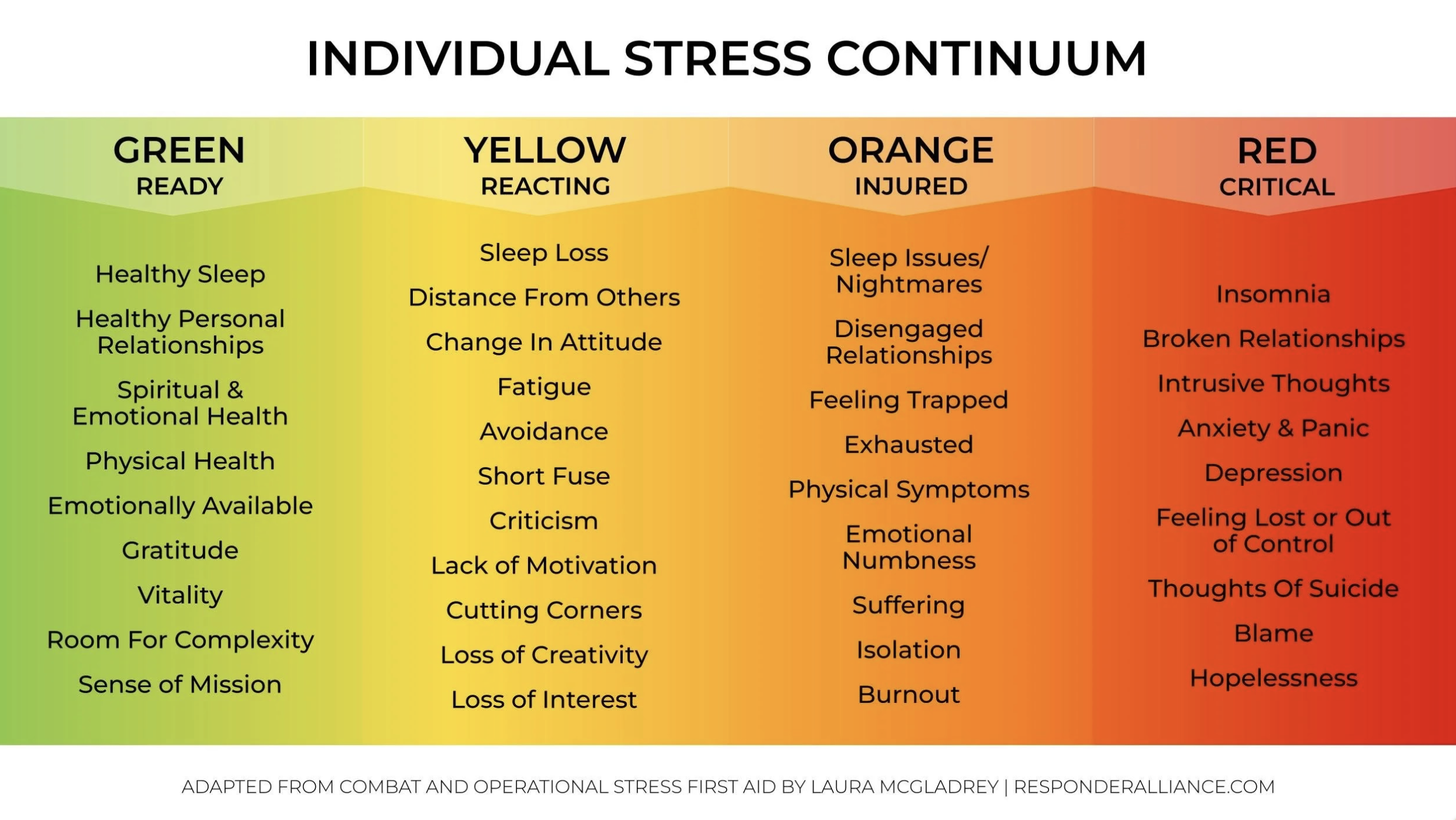
The Individual Stress Continuum (Responder Alliance/The Puma Prensa)
School is undoubtedly a high-pressure part of student life, which inevitably produces stress. Unfortunately, almost half of all U.S. students experience a large amount of stress for large amounts of time, a trend which only seems to be increasing in recent years.
According to Beth Cuniberti, Maria Carrillo High School’s psychology teacher, the rise in stress levels accompany the prevalence of “distractions” like social media and new technology. She fears that they could be taking away from students' time, lamenting that students today “don’t have true downtime…it makes it harder for them when they’re trying to study, and it builds up stress”.
Cuniberti notes that stress is “very important…[because] students are more overloaded these days.” She believes that encouraging students to stay organized and allowing students to “not feel like they have to do it all” is a good way to reduce stress and improve time management skills.
Yale News attributes the high stress levels to exhaustion and the physical taxation of early school starting times. Relational Psych points to the school environment as a major source of adolescent stress, mentioning academic pressure, busy schedules, and high workloads as significant factors.
Despite the widespread feeling of stress, there are ways to alleviate it. Harvard University, as well as professional physicians, recommend exercise, limiting excess caffeine in drinks, and eating regular meals, among others.
Cornell University’s Mental Health Center recommends at least a small level of stress to serve as motivation, but as with everything, moderation is key. “Reframing” negative thoughts and self-appreciation are also listed as ways to decrease stress levels and improve mental clarity.
The American Psychological Association (APA) adds that teachers can also help stressed out students, and lists resources on their website for aid.
Student stress is an incredibly widespread issue, and it is important to recognize the issue. Over 60% of students in the U.S. experience stress fairly regularly, and yet many people seem to misunderstand the severity of the issue, both nationally and globally.
All hope is not lost, however, as many resources exist, both online and in the real world, which are dedicated to helping people with stress and other mental conflicts. Associations like the APA work diligently in order to educate people on mental conditions, and the Centers for Disease Control and Protection (CDC) has a phone line available for those who are feeling stressed out. Stress and its various symptoms have gained more attention in recent years, and is one of the most researched topics of mental health because of its universal experience and scale.