
The struggle between balancing sports and academics: highlighting swimming
By Onario Rose, Staff Writer
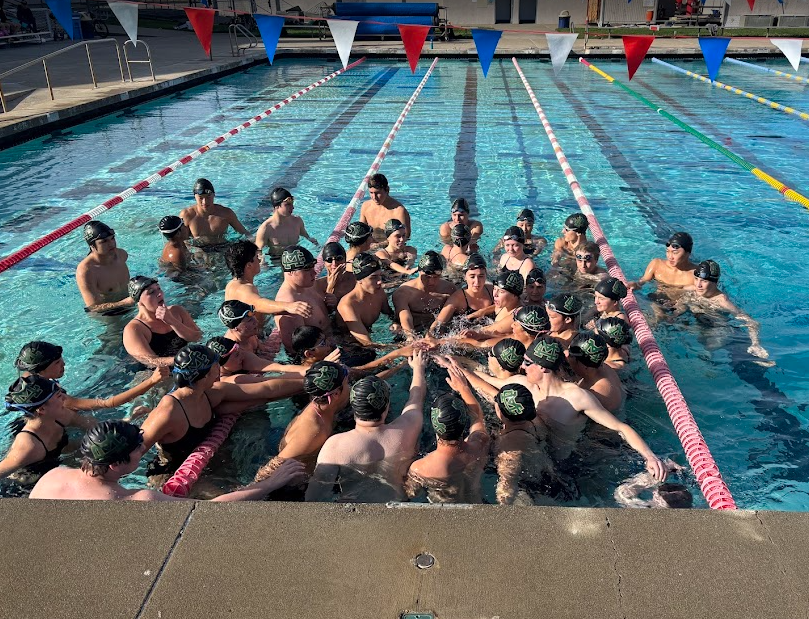
Being a student-athlete is not always as easy as it looks. From the outside, people might think swimming is just showing up to practice and racing at meets. In reality, swimming is a sport that often does not receive as much attention as sports like football, even though it takes a lot of hard work, dedication, and physical effort. There is a lot about swimming that people may not see, including the time and effort student-athletes put into training while also keeping up with homework, tests, projects, and everything else that comes with school. Balancing academics and swimming is one of the hardest parts of being a student-athlete.
Swimming takes a lot of time and energy. Some swimmers have practices before school, after school or even both. After spending hours in the pool, they have to go home and do their homework. Sometimes they’re already tired, but they still have an assignment due the next day. For sophomore Georgia Doherty, the hardest part of balancing swimming and school isn’t during practice either, it’s actually when she gets home.
Due to the fact that she lives far from where she practices, Doherty said she “usually comes home late from practice at about 8:15.” After eating and showering, she still has to start her schoolwork. “The homework can be so overwhelming,” she said, especially when she has tests in classes like chemistry and history.
School does not stop just because a student has a swim meet. If there is a big test during the same week as a meet, swimmers still have to study. If they have a project due, they still have to finish it. Swim meets can also take hours, especially when athletes have to travel somewhere. By the time they get home, they might not feel like doing homework, but they still have to get it done.
Weekend swim meets create another challenge for sophomore Madison Struna-Meyer. With meets sometimes lasting from Friday through Sunday afternoon, she said she has “a lot less time to do homework due for the next day.” Instead of waiting until she gets home, Struna-Meyer sometimes has to “bring homework to the swim meet and do it during the break in the middle.” Other times, she said, she comes home exhausted but still has to finish her assignments or study for tests.
Another problem is sleep. Swimmers need energy to practice and compete, but staying up late to finish homework can make them tired the next day. For student-athletes, it can feel like they are stuck choosing between getting enough sleep, finishing all their schoolwork and being ready for practice. Sometimes, they cannot have all three.
Additionally, time management is really important for swimmers. Student-athletes have to be more organized because they have less free time than students who are not involved in a sport. They have to figure out when to study, when to do homework, when to practice and when to rest.
For senior Casey Struna-Meyer, early-morning practices make managing schoolwork even more difficult. Due to morning practice, she has to “wake up at about 5:00 a.m.” to make it to practice by 5:45. After practicing the night before and staying up late to do homework, she said she would wake up “so exhausted.” Over time, she has realized that managing her schedule is necessary to “keep my grades up and not let them slip.”
Even though swimming can make school harder, it also teaches athletes important lessons. Swimmers learn how to work hard even when they are tired. They learn how to set goals and keep trying when they do not get the time they want. Those skills can also help in school.
For example, if a swimmer has a goal of getting a faster time, they have to keep practicing and working toward it. School can be the same way. If a student is struggling in a class, they cannot just give up. They have to study more, ask questions, and keep trying. Swimming can teach students that improvement takes time.
Swimming has also taught Struna-Meyer how important setting goals can be. Although she has not completely decided what she wants to do in the future, she said. “I do want to swim in college,” explaining that she needs to set goals and improve her times if she wants to compete at the Division I or Division II level. She believes that setting goals in both sports and school can help students “get past struggles.”
Another thing that is important is that coaches and teachers understand how difficult the schedule can be for student-athletes. Students should still be responsible for their work, but having support can make a big difference. If a student has a late swim meet and comes to school tired the next day, it does not mean they are lazy. They may simply be trying to handle a lot at once.
For sophomore Serene Wagner, balancing swimming and school means constantly adjusting to a demanding schedule. Even when athletes have school the next day, she said, “coaches still expect you to give your all.” Wagner said that one part of being a student-athlete that people often overlook is “how hard it is to balance trying to give your all to a sport” while also keeping up with academics. Between late and early practices, tutoring and homework, she has had to learn how to adapt to a schedule that leaves little free time.
Being a student-athlete also means making sacrifices. There might be times when friends are hanging out, but a swimmer has practice. There might be times when an athlete wants to relax, but homework still needs to be finished. Giving up some free time can be one of the hardest parts of staying committed to a sport.
At the same time, swimming is worth it for many athletes. Being part of a team, improving times, competing at meets and reaching goals can make all the hard work feel worthwhile. The friendships and memories athletes make can also be a major reason they continue swimming.
Overall, balancing academics and swimming is difficult, but it is possible with good time management and effort. Student swimmers have to work hard both in the classroom and in the pool. They will probably experience stressful days, late nights and times when they feel overwhelmed. However, learning how to deal with those challenges can make them stronger and more responsible.
Swimming is not just about how fast someone can finish a race. It is also about learning how to handle pressure, manage time and keep going when things become difficult. Balancing school and swimming is a challenge, but it can also teach student-athletes lessons that they can use long after they leave the pool.