
The future doctor
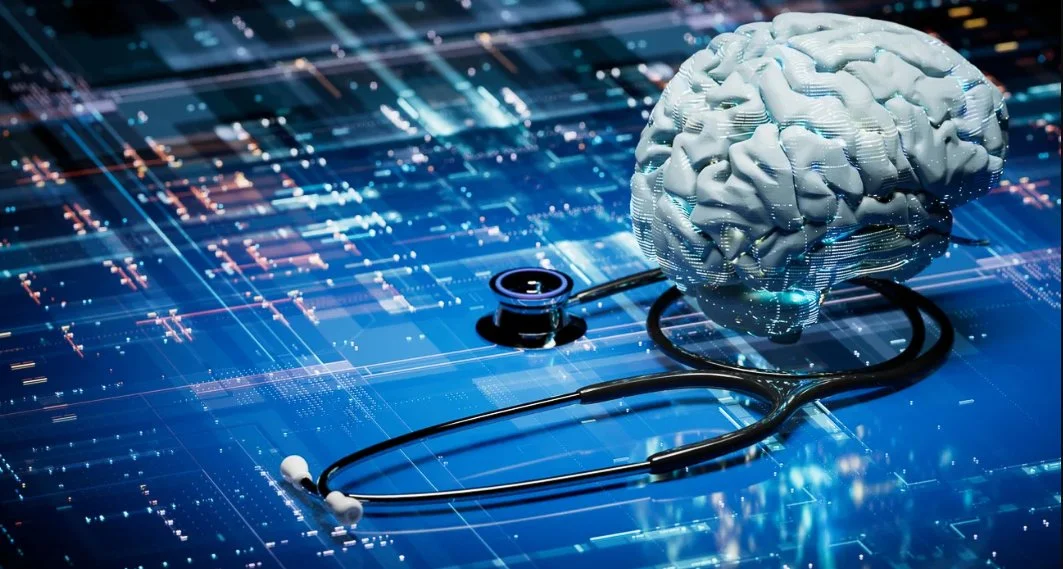
Graphic of a blue brain with a stethoscope (The Puma Prensa)
By Rheya Bushan, Features Editor
Walk into any hospital today and you might not notice it—but artificial intelligence is already there, quietly shaping diagnoses, guiding treatments, and even predicting medical emergencies before they happen. It’s not science fiction. It’s not the distant future. It’s the silent partner in modern medicine, transforming healthcare in ways most patients don’t even realize.
Diagnostics are getting sharper, faster.
One of the most immediate successes of AI in medicine is in diagnostics. Algorithms trained on millions of medical images can now detect certain conditions, such as diabetic retinopathy, early-stage cancers, or bone fractures, with accuracy rivaling or even surpassing human specialists. These systems don’t replace clinicians; instead, they function like supercharged microscopes, giving doctors a second set of eyes and reducing the odds of missed signs.
In radiology departments, AI tools sift through CT scans, highlighting abnormalities in seconds. In dermatology, smartphone apps can flag suspicious skin lesions for follow up. And in pathology labs, machine learning models help analyze tissue samples with extraordinary precision.
At Sutter Health, a Urologist, Sophie Fletcher gave the example that they now have “miniature robot arms that can now assist during minor surgery.”
Personalized medicine is becoming a reality.
Traditional treatment strategies often rely on average statistical averages, but no two patients are exactly alike. Machine learning models can analyse genetic data, lifestyle information, lab results, and clinical history to tailor treatments more precisely. For cancer patients, for example, this can mean identifying which therapy is most likely to succeed based on the tumor’s molecular signature.
For example, in Medtronic, according to an R&D manager, Kevin Mauch he can “just ask CoPilot and will summarize everything into notes that they can read.” Many other managers and engineers have said that this is very “handy.”
The ultimate goal? Treatments designed not for the “average” patient, but unique for every single one, with recommendations updated in real time as your health data evolves.
The ethical issues that surround AI.
Of course, these breakthroughs come with challenges. Medical AI raises complex questions around bias, privacy, data security and transparency. How should clinicians weigh an algorithm’s recommendation? Who is responsible when AI makes an error? How do we ensure that AI is trained on diverse and representative data?
These are not technical questions alone—they are societal ones. Many health systems are now developing AI governance boards, clinical oversight policies, and patient-informed consent frameworks to ensure that AI is deployed responsibly.
Medicine has always evolved through the interplay of new tools and expert judgement. AI is simply the latest, and perhaps most powerful, addition to that toolkit. The future of healthcare won’t be shaped by algorithms alone, but by how clinicians, researchers, and patients choose to use them.