
Why Bad Bunny’s Super Bowl halftime performance matters
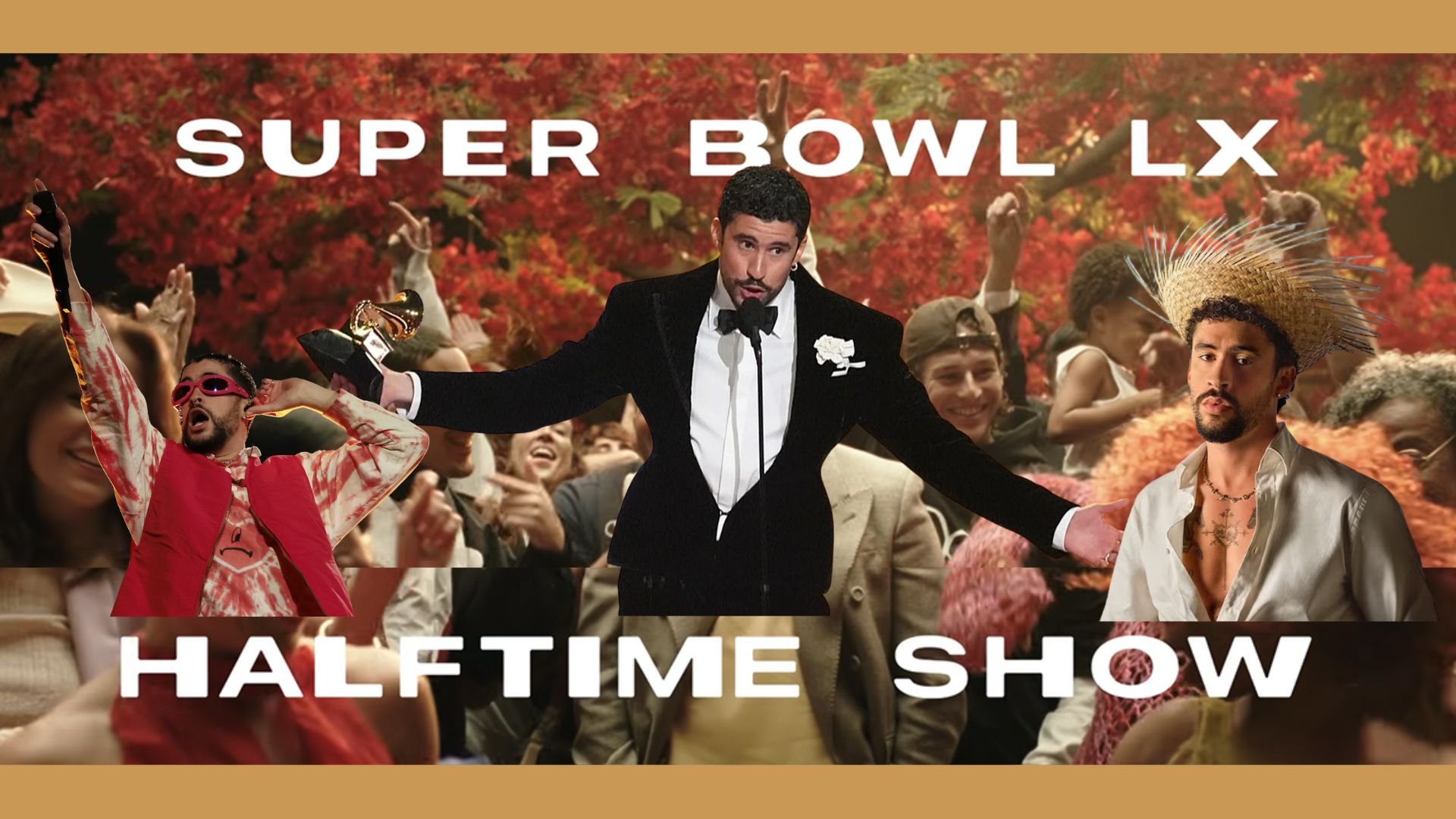
Graphic of Bad Bunny winning a Grammy (Isa Dajalos / The Puma Prensa)
By Isa Dajalos, Staff Writer
With Super Bowl Sunday around the corner, thousands of football and non-football fans alike anticipate the NFL championship game either for the matchup of the season’s best teams or the beloved halftime show. In fact, since Micheal Jackson’s iconic halftime performance in 1993, halftime performances have consistently peaked viewership of every Super Bowl. So, it’s safe to assume that trend will continue this year with Bad Bunny headlining. Much public discourse has followed the NFL’s announcement of Bad Bunny as the halftime performer back in September, due to him primarily making music in Spanish. Trump’s ICE crackdown has shifted the political climate surrounding immigrants in America to much more extreme ends. As such, people are much more comfortable openly criticizing anyone and anything that attempts to uplift or defend the non-white demographics targeted by ICE.
Many online complaints expressed anger at the fact that a large portion of the Superbowl audience will not be able to understand Bad Bunny’s non-English performance, and even questioned why a “non-American” is allowed to perform at one of the biggest American sporting events. Give either of these common grievances a second of thought, and it becomes clear that these statements are either false, non-issues, or just rooted in racism.
First of all, Bad Bunny is American, born and raised in the U.S. territory Puerto Rico despite what many conservatives seem to believe. Even so, taking a step back, several non-Americans have performed the Super Bowl’s halftime show in the past without nearly as much pushback. This includes artists like the Irish band U2, British band Coldplay or Paul McCartney, Canadians Shania Twain and the Weeknd, Colombian singers Shakira and J. Balvin, as well as Spanish singer Enrique Iglesias. So, the surface-level complaint about a non-American performing at an American game, even if Bad Bunny was truly not a U.S. citizen, is baseless and hypocritical. Even out of the former halftime performers just listed, a handful are Latino and not American citizens, yet the criticism they faced mainly surrounded their actual performances and not their ethnicities. Without even diving into the obvious lack of criticism toward foreign halftime performers that are European or white-passing, the difference in areas of criticism Latino artists faced then compared to now emphasizes the severity of racism spurred by Trump's current ICE agenda and the language the President uses to describe immigrants. Behind the plainly ignorant retort that Bad Bunny is not an American lies the shameful truth that the current President is encouraging a much more openly racist culture in our country.
As for complaints concerning whether or not the Super Bowl audience will understand a non-English performance, they seem to reflect the similar conservative reaction to Kendrick Lamar’s halftime performance last year. Online reactions to Lamar’s performance largely consisted of people claiming they could not understand his rapping (which was in English) as well as that it was too political and at the same time “ghetto.” To start, Spanish is the second most spoken language in the U.S. after English so there is no shortage of an audience to receive Bad Bunny’s set. But beyond that, the Super Bowl has long been broadening its global audience and Mexico is the country with second highest viewership, as reported by the NFL in 2024. On top of that, last year Bad Bunny held the title of Spotify’s most streamed artist globally, the fourth time he has achieved this feat. And most recently, Bad Bunny snagged up the 2026 Grammy Award for album of the year with “DeBÍ TiRAR MáS FOToS,” making history as the first ever Spanish-language album to win the category. Evidently, there are plenty of people from all walks of life that will enjoy this year's halftime show, whether they understand the language or not.
Regardless of the criticism the Puerto Rican artist is facing, the NFL and Apple Music–who manages advertising for the halftime show–are standing their ground on Bad Bunny as the headliner. Inching closer to the long awaited Sunday, Apple Music released a teaser for Bad Bunny’s performance that included the singer dancing with people of all ages, genders, and ethnicities. Although the teaser maintained a neutral and uplifting tone without explicitly addressing the racist undertones of the controversy, Bad Bunny still made his message inspiring unity and inclusion clear with the closing statement “the world will dance.”