
Classes in chaos: the ongoing legacy of a budget crisis
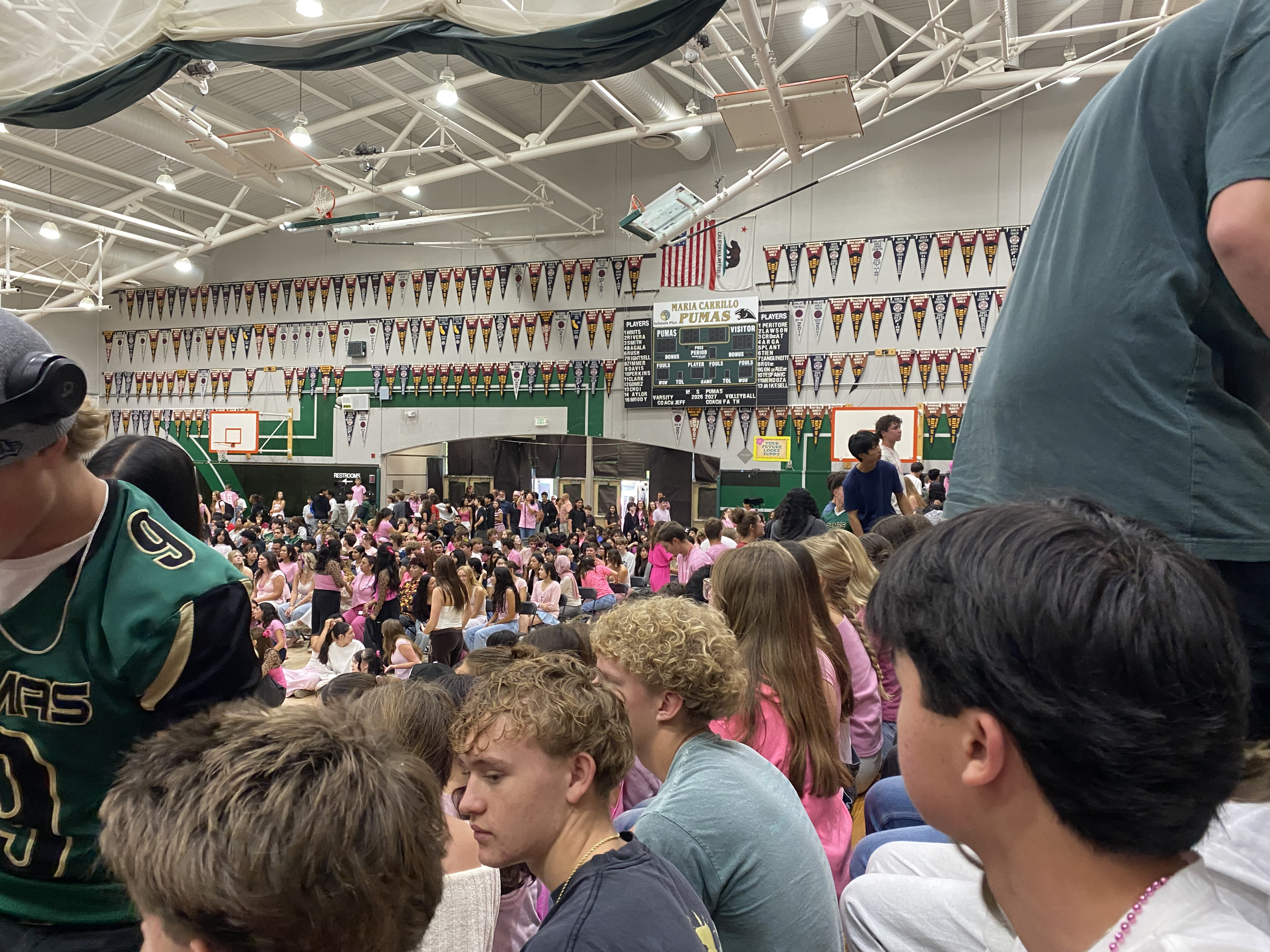
An MCHS rally, which typically contain upwards of 1000 students (Ryan Win-Ruan / The Puma Prensa)
By Ryan Win-Ruan, Senior News Editor
In recent years, the Santa Rosa School District was frequently thrown into chaos, culminating in a budget crisis that ended with the closure of several middle schools and the consolidation of the student population into high school campuses. As the school year begins anew, a period of adjustment is certainly bound to happen as schools figure out the ever-shifting administrative climate of the district.
The mess of district management has trickled down to its lowest operational levels, creating a plethora of issues which its schools are forced to solve on their own. At Maria Carrillo High School, for example, the effects are far less direct, and yet, the school is still suffering consequences. Namely, the scheduling issues which have swamped counselors since the school year’s beginning in mid-August.
Counselor Kimberly Handel describes the situation as being “like a puzzle,” with few alternate options to solve the problems they face. She admits that the population issues are “always an issue, but not to the extent of this year.” Handel describes the experience from the counselors’ points of view as “inundated with kids requesting schedule changes and kids waiting outside our doors…there were students here nonstop, all day, for the first couple weeks.”
According to Handel, the master schedule with which counselors assign students to classes was withheld until nearly the beginning of the school year, resulting in a frantic rush to organize classes, which compounded into the current situation. The convoluted system of “district telling admin telling counselors that we have to close classes” contributed in no small part to the disorganization, and has been a topic of criticism from some critics of the district’s management.
Beyond scheduling, most of the new counselors, although experienced, are not accustomed to high school counseling, further complicating issues. Handel mentioned a seniority system where the “counselors at this school got cut, even if they had been here for a while,” and were replaced by former elementary school counselors who had worked in the district for longer, even if they were not accustomed to their newly assigned schools.
“Most of the chaos is coming from all of the changes that we’re being told we have to make,” Handel says.
Along with the counselors, teachers are also facing similar problems and adapting in their own ways. At the forefront of education issues is the sheer discrepancy in class sizes: many are overcrowded, in excess of 40 students per classroom, bloating far over their intended size. This extreme sizing is because nearly 40 sections were withheld approval from the district, forcing counselors to cram students into rooms ill-suited for the attendance. Spanish 3/Spanish 3H, AP Government and Economy, and AP Chemistry were all buckling under the sheer volume of students, forcing faculty to majorly modify their methods of education to match. Unfortunately, the recent retirement and removal of several teachers has compounded these issues, with more students per teacher, and less classes to fit them in.
As Handel explains, “it’s a variety of factors that have led to this situation…there’s a lot to it.”
To solve this problem, some solutions have been enacted; namely, the addition of extra class periods in order to redistribute overflowing classes and avoid spending extra money on teachers’ overages. However, this has caused problems in and of itself, as the new periods tend to be sparsely populated, with only 20 or so students per class. In particular, AP United States History’s 3rd Period class has a total of 19 students, only one more than the 18 needed to close the section. Some students have been pushed towards formerly less-popular routes, such as taking classes at the Santa Rosa Junior College or tutoring instead of standard classes.
These reforms are taking effect in tandem with the brand-new phone policy and increased crackdowns on mobile devices, altering the school’s climate and student culture in significant ways. Despite this, many remain hopeful: the MCHS student body and school faculties have repeatedly banded together, offering a united voice at council meetings and protests, and major actions have been taken by the district in order to solve these issues, though their effectiveness is a topic of much debate.