
The effects of 9/11 today
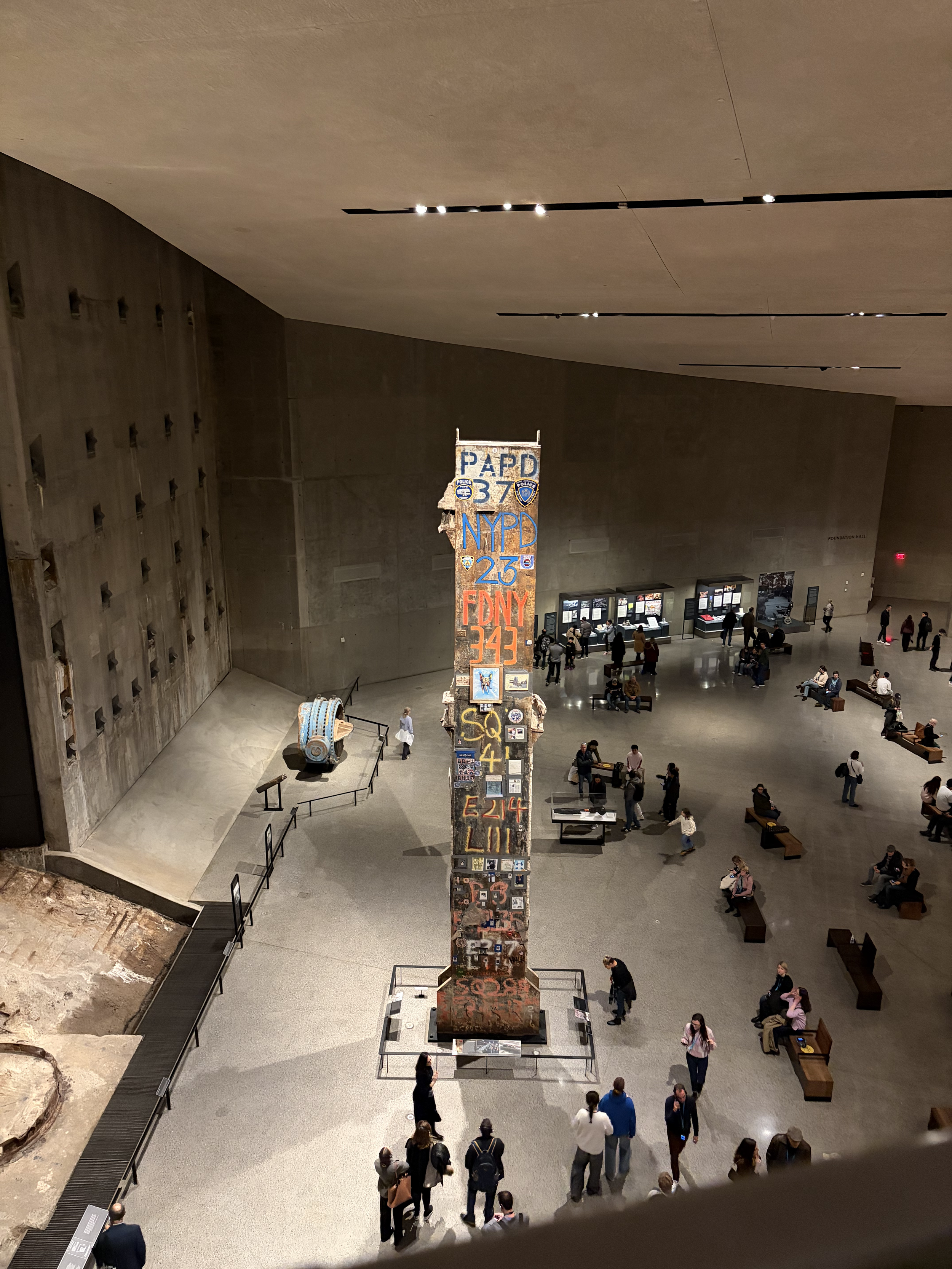
An image of an exhibit in the 9/11 museum (Ava Cotton / The Puma Prensa)
By Ava Cotton, Staff Writer
It's been 25 years since 9/11 shook the world, and we are still feeling the aftershocks.
On this day in 2001, four airplanes were hijacked by an Islamic terrorist organization called al-Qaeda. Two of the planes hit the World Trade Center in New York City, another into the Pentagon near Washington DC, and another in a field in Pennsylvania. This resulted in thousands of people losing their lives in the initial event and the aftermath. 9/11 changed the United States, and the world, forever. The effects are still being felt today through increased airport security, the public perception of Muslim-Americans, and long-lasting health issues.
Before 9/11, people could escort family and friends through security without a boarding pass, airport screening was handled by private companies, and knives and blades under 4 inches were allowed in carry ons. After 9/11, the Transportation Security Administration (TSA) was introduced. The creation of TSA has drastically improved airport security services with additional screening of bags, bomb technicians, and explosive detection dog handlers. However, some critics of TSA report racial profiling, which seems to target people who have Muslim names or people who look as though they are of Middle Eastern background.
Islamophobia spread quickly after 9/11. Harmful stereotypes and government policies began to form as people started to believe that Muslims were all guilty by association and started to view them through the lens that they may become a terrorist. This can all be seen through the pushback of New York City's current mayor, Zohran Mamdani. A petition with over 100,000 signatures was signed stating that the mayor should not attend this year's 9/11 memorial. The attempted exclusion the Muslim mayor faced highlights the negative perception and stereotypes that 9/11 instilled in American’s minds.
However, more life threatening health consequences came out of 9/11 as well. The collapse of the Twin Towers on 9/11 released an abundance of dust clouds which contained particles including asbestos, glass, concrete, and more. People like first responders, survivors, and local residents developed health issues because of this such as cancers, asthma, respiratory diseases, and so many more. Over 400,000 people were exposed to these toxic particles leading to over 5000 deaths, which is more deaths than from the actual attacks. However the health problems didn’t end even a few years after the attacks; people were still diagnosed with cancer ten years later. 9/11 proceeded to wreck people's health a decade after it happened.
9/11 wrecked major havoc across America. It devastated victims, their families, and citizens across the country. We are still living through the impacts of the attack, and we are slowly picking up the pieces and fitting them back together.