
Exclusive: Superintendent Thomas describes her hopes and dreams for the school district
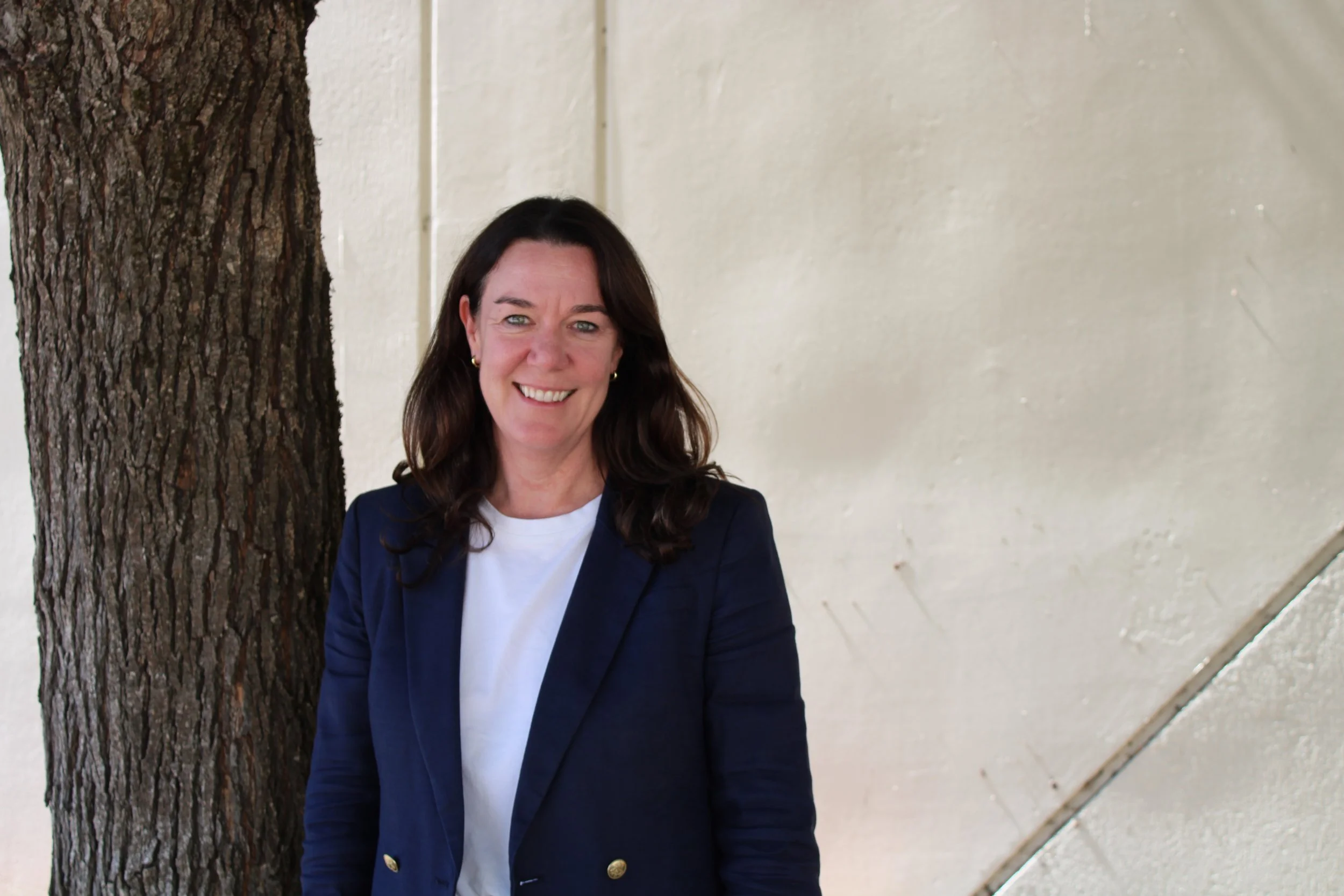
Dr. Monica Thomas, our newly appointed superintendent (Sophia Nagra / The Puma Prensa)
By Rheya Bushan, Senior Opinion Editor, and Hugh Cochrane, Photo Editor
For Dr. Monica Thomas, coming to Santa Rosa City Schools feels a little like coming home.
She grew up in Ukiah, spent her childhood playing sports across Sonoma County and swimming in its pools, and went on to spend 26 years working in education—most recently two decades in Oakland Unified. But when she arrived at SRCS on July 1, she inherited a district that looked very different from the one she remembered.
Trust between the district and the community has remained fragile. Millions of dollars in cuts have reshaped schools and programs. Students are navigating crowded classrooms, complicated schedules, and fewer support services. And after a string of superintendents in recent years, Thomas is asking the community to believe that she is here to stay.
She understands what that kind of instability feels like.
As a principal in Oakland Unified, where she spent 20 years, Thomas said she worked under seven different superintendents in eight years. She described how she became “very insulated,” focusing on her own school rather than the larger district.
Then two superintendents stayed longer in her old district, long enough to change that.
“We were really able to stabilize, build momentum, build coherence, and build community,” Thomas remarked.
Now, Thomas is trying to bring that same stability to Santa Rosa. Her approach began with something deceptively simple: showing up.
Since taking office on July 1, she has visited every campus, met with staff and families, held longer school visits and has begun to reinvigorate the student superintendent council. Across these conversations, she asks four questions: What do you love about your school? What don’t you love? What would you change? And what would that change look, sound or feel like?
Thomas says that she wants students and staff to know that she is listening. But in a district where listening has become only the first step, the bigger question is what happens next. That’s what follows Thomas through nearly every issue facing the district.
For students, the district’s financial crisis is not something that exists only in a budget presentation. It’s visible in the number of adults on campus, the availability of counseling, the size of classes, and the programs students are able to take.
SRCS made approximately $32 million in cuts to avoid state takeover and has entered the school year in a more financially stable position. When asked whether programs such as special education and other student supports could be restored, Thomas gave a blunt answer:
“I don’t think we’ll be reversing any cuts.”
The district is still operating in what Thomas described as a “pretty tenuous budget space.” Its most recent financial figures have been encouraging enough to show that the cuts are doing what they were intended to do: keeping the district from slipping back into deficit. But they have not created much room to undo what has been lost.
For Thomas, that makes the question less about what can immediately be restored and more about what the district wants to become.
That question is particularly personal when it comes to the programs students have watched disappear.
Thomas was a student athlete herself. She swam varsity for four years and played varsity tennis for three. During her freshman year, her own school district cut athletics entirely. For roughly a year and a half, students had to pay to play, with each varsity sport costing $250 at the time.
She was also a student journalist and joined her high school newspaper as a freshman at a time when freshmen were not supposed to be there. Somehow, she and another student ended up in the class anyway, surrounded mostly by upperclassmen.
“We were like little cub reporters,” she said.
By senior year, she had become editor-in-chief.
Decades later, she still talks about journalism with the enthusiasm of someone who has not quite left the newsroom. And when she talks about the importance of arts and athletics, it is not simply another item on a district budget spreadsheet. She has seen firsthand what can happen when a student is given access to something they did not know they needed.
“I really feel so strongly about both athletics and arts as just such a necessary part of a great education for kids,” she said.
That philosophy is now colliding with a district that has very little money to spare.
The board has identified academics and enrichment — including arts and athletics — as a priority for future budget decisions. Thomas said the district will begin determining those priorities this fall, using enrollment numbers and projected revenue to decide what it can afford in the following school year.
That means students asking when ceramics, athletics or other programs will receive more funding may not get the immediate answer they want.
But Thomas does not seem particularly interested in pretending otherwise.
Her answers throughout the interview rarely come with easy promises. When she was asked whether cuts would be reversed, she blatantly replied with a no. What about bringing school resource officers back to campus? She said the district does not currently have the money. Will more teachers be hired, she pointed to declining enrollment as her answer.
It is a distinctly unflashy approach to a job that often rewards big announcements.
That same practicality appears when she talks about the district’s ongoing debate over school resource officers. Thomas has experience with them, including a school resource officer at the Oakland school where she was a principal. She remembers the officer not primarily as a police presence, but as another trusted adult on campus.
At the same time, she acknowledged the complicated history between police and many communities.
“There’s a lot of ways to stay safe,” Thomas said.
For her, safety extends beyond whether someone is physically protected from violence. She talks about emotional safety, intellectual safety and the ability to disagree in a classroom without feeling threatened.
It is a broader definition of safety, but it also reveals something about how Thomas sees her job. She does not seem to view a school district simply as a collection of buildings, budgets and test scores. Her answers repeatedly return to relationships: between students and teachers, schools and families, principals and the district office.
That perspective may come partly from her own experience with instability.
Before becoming a superintendent, Thomas spent years working in schools and district administration. She supervised elementary schools, worked on school closures and mergers, developed district policy and worked with a school board. By the time she left Oakland Unified, she had spent two decades becoming deeply familiar with the system.
Coming to Santa Rosa meant giving up that familiarity.
“It’s hard to be new,” she admitted.
She knows what the uncomfortable parts of being a new are because she has been on the other side of them. She knows what it feels like when a superintendent is too distant to matter to a school. She knows what happens when teachers and principals stop expecting the district office to provide stability.
Now, she is asking Santa Rosa to give her time to prove that she can provide it.
There is a certain contradiction to Thomas’s first months in the district. She has arrived at a time when nearly everything seems to demand an immediate answer, yet many of the problems she has inherited cannot be solved quickly.
The schedule problems students experienced this year are a good example.
Thomas said the district currently does not have a clear system for reallocation class sections between its high schools. As enrollment shifted and staffing had to be balanced against a limited budget, some students ended up in enormous classes while others sat in sections with far fewer students. The district eventually created a team to visit schools and work through the schedules, but the process took weeks.
For students, that meant waiting.
For Thomas, it meant seeing a problem in the system rather than simply blaming the people working inside it, so she got to work.
Her solution is not just to fix this year’s schedules. She wants the district to build a process that prevents the same problem from happening again.
That distinction — between solving a problem and changing the system that created it — may ultimately define Thomas’s tenure.
She talks frequently about systems, processes and feedback loops. Her student superintendent council, for example, is supposed to be more than a monthly meeting where students tell the superintendent what they dislike. Thomas described it as a loop: students tell her what is happening, she takes it back to the district, returns with what was done, and students tell her whether it actually worked.
But there is one obvious challenge: making sure that students who enter that loop actually represent the students who need to be heard.
During the interview, when asked about reaching students who are not already involved in leadership programs, Thomas immediately asked the students (us, the Puma Prensa reporters) across from what they thought would work.
The answer was clubs.
At Maria Carrillo High School, dozens of student organizations gather during lunch for a club showcase. There are cultural clubs, affinity groups, service organizations and student leadership groups. Many of them reach students who might never apply for a formal superintendent council.
Thomas was intrigued.
She started asking questions about how clubs were organized, who maintained the list of organizations and when the next showcase would be, also specifically expressing interest in
By the end of the conversation, she had a plan to show up.
It was a small moment, but perhaps one of the clearest examples of the kind of superintendent Thomas says she wants to be: not someone who arrives with every answer, but someone willing to change the route after hearing a better one.
And the commitment to show up and try to meet students really helps paint a picture of what kind of superintendent Thomas hopes to be, one for the students.
That willingness will matter in a district where students have plenty of questions and very few easy answers, which is showing more interest than superintendents and administrators of the past had ever shown.
How will schools rebuild counseling services? What happens to arts and athletics? Can class sizes remain manageable? Will students have a voice in major budget decisions? And, perhaps most importantly, can a district that has cycled through leaders so quickly finally become something students can count on?
Thomas doesn’t have an exact timeline for all of these questions, but wants to do every thing she can to help, repeatedly affirming her need to help the district.
“I’m ready to do the work for as long as this community will have me, and as long as I get results,” she affirmed.
For a superintendent entering a district tired of starting over, that may be the most important promise she can make.
Now she has to turn showing up into something students can see long after the novelty of a new superintendent wears off.