
“American” Christmas isn’t actually American - here’s why
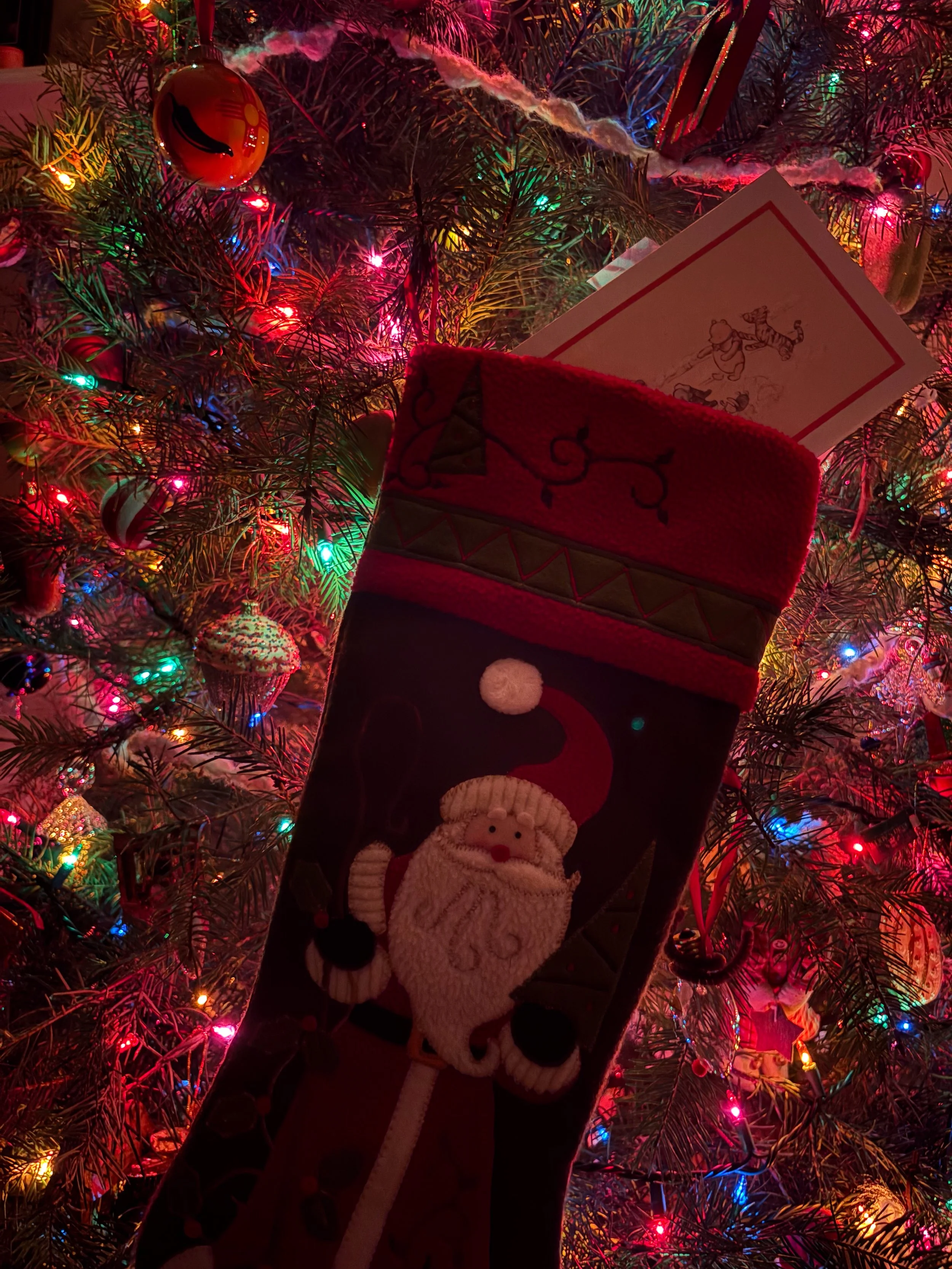
Photo of a Christmas stocking against a decorated Christmas tree (The Puma Prensa / Lauren Chavez)
By Lauren Chavez, Features Editor, Social Media Manager
Christmas is an iconic holiday celebrated all over the world. Children everywhere look forward to waking up to snow falling outside and holiday tunes blasting around every corner; the sense of excitement and wonder most feel around the holidays knows no borders. There are a plethora of traditions that have become synonymous with American Christmas, and even though they might not be entirely exclusive to the country, it’s difficult to find anyone who doesn’t immediately associate the classic American holiday with decorated trees, advent calendars, ugly sweaters, and Santa Claus.
The truth is, although these traditions, among others, are iconic within United States culture, many of them originated elsewhere on the planet, and it becomes clear that American Christmas traditions are simply a hodge-podge of ideas from around the world.
The Christmas tree originated in Germany in the 16th century, and it came from Roman evergreen symbolism as well as medieval “paradise” trees, which were decorated with apples. The tradition was spread around the world by German settlers, and eventually became an iconic symbol of Christmas in America, made even more popular through media such as movies and television. Placing presents under the tree became a tradition after Queen Victoria and Prince Albert were depicted with their children with gifts sitting under a decorated tree in an 1848 engraving, and from then on this image was cemented in the general public’s minds.
Stockings are another classic part of Christmas, usually filled with goodies on Christmas Eve and opened the next morning along with presents under the tree. They actually come from a time long ago in Scandinavia, when children believed that a Norse god would leave candy in the socks of children he deemed kind.
Equally as much of a staple is the idea of wrapping presents in order to disguise them, which began in Asia. Wrapping paper has been found in Ancient China from the 2nd Century B.C., and materials included cloth and silk.
Another iconic American tradition lies in the form of Christmas cards sent between friends and family, usually updating each other on how life has been for the past year and any new developments. The first Christmas card, however, actually debuted in England in 1843 with just a simple “A Merry Christmas and a Happy New Year to you.” As the trend caught on across Europe and the U.S., it began to develop into the detailed, pretty cards we know today.
Perhaps what most people think of immediately when the word “Christmas” is brought up, the idea of Santa Claus also began outside of the United States. Santa is based on Saint Nicholas, who was a 4th century Greek bishop in what is now Turkey, known for giving gifts. This gradually blossomed into other European traditions such as Sinterklaas, an elderly bishop figure who brings children gifts in Belgium and the Netherlands, and eventually the Santa Claus we know today.
There are also many food staples that many commonly associate with American Christmas, such as candy canes, gingerbread men and houses, and eggnog, but these delicacies all originated outside of the country.
As with many other traditions common in the United States now, candy canes, both as a treat and a form of decoration, got their start in Germany in 1670. When a German-Swedish immigrant placed them in a tree in the States in 1847, they caught on here. Later on, when the automated candy-cane machine was invented in the 1950s, the striped treats’ place in American Christmas traditions was solidified.
The Germans are also responsible for the creation of the gingerbread house. Although they were first decorated by Queen Elizabeth I, the German Brothers Grimm depiction of it in “Hansel and Gretel” turned gingerbread into a widely loved treat. And as for eggnog–that rich, custard-like drink common around the holidays–it got its start in medieval England, when it was called posset and was made with hot curdled milk and ale or wine.
So far, it seems that most Christmas traditions have been brought over by immigrants long ago, but the influence of other countries on American Christmas continues even into more recent years. Ugly Christmas sweaters, which have become an iconic part of holiday parties and school spirit days alike, first became a party trend in Vancouver, Canada in 2001, and now, the ugly sweater business is worth millions, with numerous American retailers jumping on the trend.
The Nutcracker ballet, which draws millions of attendees every year around the holidays, was first performed for the first time outside of its mother country, Russia, in England in 1934, and then went on to tour the United States in 1944. It has since become an essential part of the winter season for countless people.
Finally, poinsettias–the beautiful red and green flowers associated with Christmas–were brought to the United States by ambassador to Mexico Joel Poinsett. Horticulturist Paul Ecke introduced the plant to the masses, and to this day, the poinsettia is still the best selling potted plant.
The world has made a tremendous impact on America in general, but it’s easier to see when looked at through the perspective of something as recognizable as Christmas. Understanding how the things we perceive as having been created inside the United States actually came to be here can give us a better perspective on other countries as well as a deeper regard for what we are able to enjoy during the month of December.